How Cartier became a global jewellery empire
From a small Paris workshop in 1847 to becoming an international maison by the 20th century, Cartier’s early history was shaped by ambition, travel and three visionary brothers
By Rachael Taylor
The house of Cartier started with one man, Louis-François Cartier, but it was a family affair to make it one of the most recognised and respected jewellers in history.
It was, in fact, Louis-François’ father, Pierre Cartier, who set the dynasty in motion, although he could never have imagined the consequences of his actions in the moment. Pierre had fought in the Napoleonic wars and spent time locked in the prison ships docked off the harbour at Portsmouth in Britain. When the war ended in 1815, he returned to Paris destitute and aimless. He would go on to find employment as a metalworker and have five children with his wife Elisabeth, who was a washerwoman.
The eldest of those children born into this working-class Parisian family was Louis-François, and when he was barely out of school, his father sent him to work as an apprentice in a jewellery workshop owned by Adolphe Picard on Rue Montorgueil in Paris. It was a tough education – days were long and gruelling, and order was maintained with a whip – but he stayed, and in 1847, at the age of 27, he bought the business from Picard, renaming it Cartier. His makers mark – a symbol hallmarked into every piece of Cartier jewellery to authenticate it – was his initials L C separated with an ace of hearts playing card, perhaps as a nod to the financial gamble he was taking. Thankfully, the risk paid off, and the Cartier business thrived and expanded.
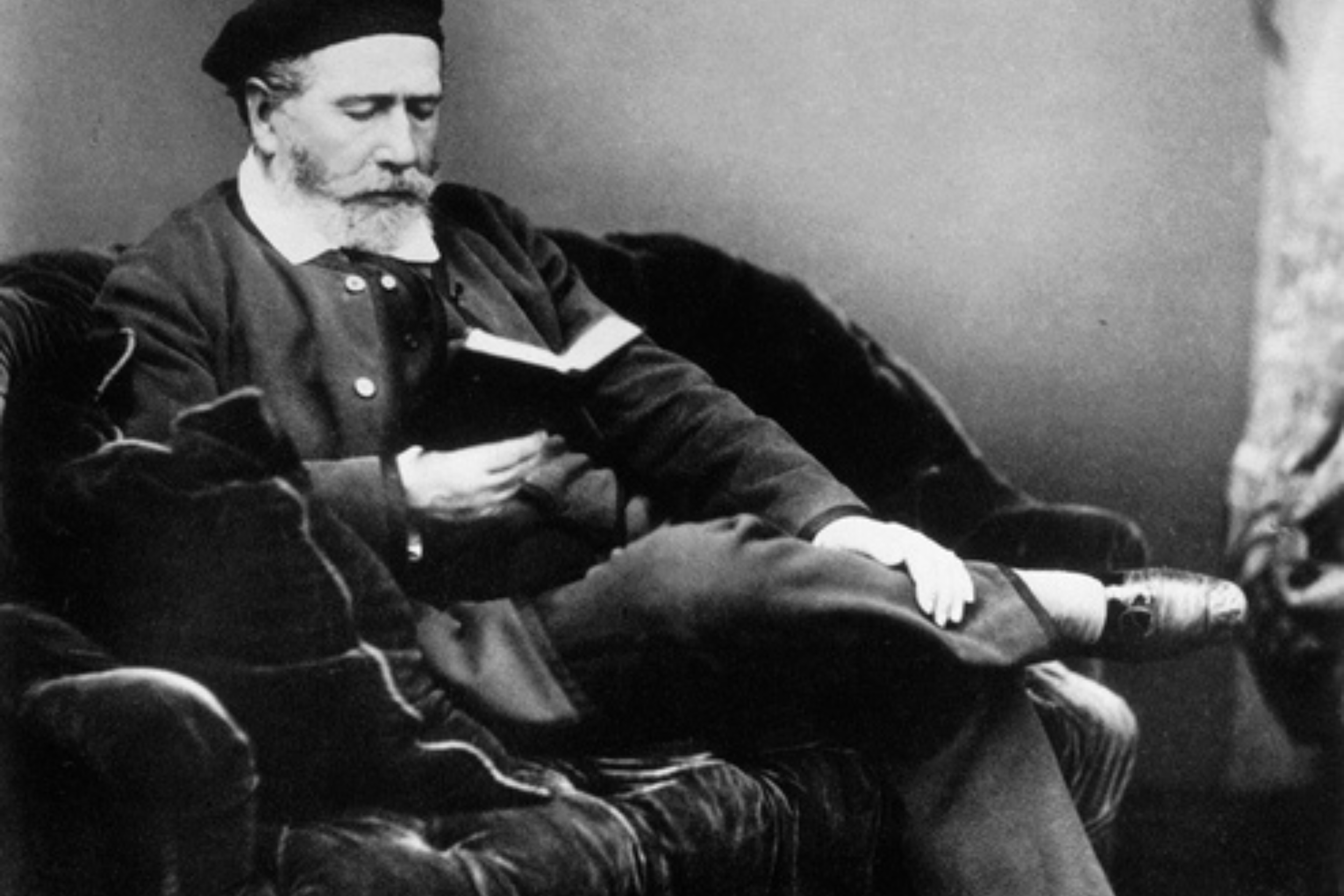
A photograph of Louis-François Cartier. (Image: Fondation de la Haute Horlogerie)
A princess opens the door to high society
In 1856, Princess Mathilde, a cousin of Emperor Napoleon III, purchased one of Cartier’s jewels, and the Cartier name was suddenly whispered among Parisian high society and even the international elite. Three years later, Louis-François bought Gillion, a Parisian jeweller better known than his own, and renamed his business Cartier Gillion.
Louis-François’ son Alfred Cartier took over the family business in 1874, but it was the arrival of his own three sons – the highly ambitious Louis Cartier, Pierre Cartier and Jacques Cartier – who would really shake up the jeweller and initiate its ascendance to the global brand we know today.
The brotherly revolution started with Louis, who joined the maison in 1898. A year later, he spearheaded the renaming of the business, stripping away Gillon to once again be known simply as Cartier. At the same time, the business opened a boutique at 13 rue de la Paix, just a stone’s throw from Place Vendôme – the heartland of luxury jewellery in Paris. The move was funded by an enormous dowry levied through a strategic arranged marriage to Andrée-Caroline Worth, granddaughter of world-famous couturier Charles Frederick Worth.
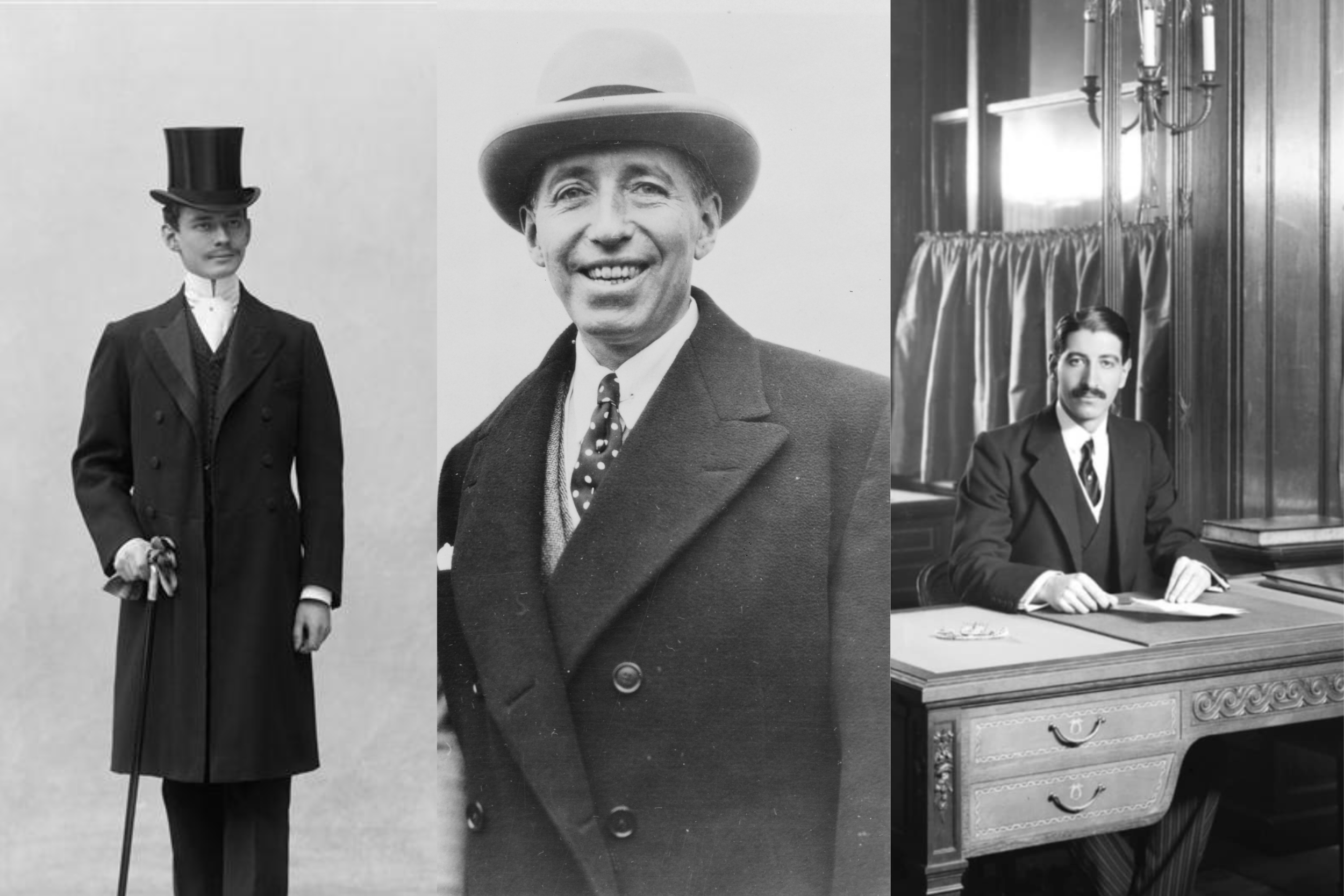
Left to right: Brothers Louis Cartier, Pierre Cartier, and Jacques Cartier. (Images: Médiathèque de l'architecture et du patrimoine; Library of Congress; Heritage England)
Never copy, only create
Cartier garnered a reputation for innovation, and the trio of brothers would later live by a motto of: “Never copy, only create.” One of Louis’ most successful experiments at the close of the 19th century was to use platinum in place of gold. This precious metal is now widely recognised and used by jewellers across the world, but at the time it was purely an industrial metal and thus its use in fine jewellery was revolutionary.
The white metal, which unlike silver does not tarnish, is highly malleable and allowed Cartier to create delicate, diamond-set jewels inspired by those owned by 18th century French aristocrats; a stark contrast to the heavier, colourful, feminist Art Nouveau jewels popular at the time. A signature Cartier Garland style emerged, swirling across platinum tiaras, necklaces and earrings that won over well-heeled women in Europe and the United States, including royals.
Pierre Cartier, the second eldest of the brothers, would be an agitator in his own right, championing the global expansion of the brand’s retail empire. He started by opening a Cartier boutique on New Burlington Street in London in 1902, where the brand showcased a new style of geometric, abstract jewels with unusual colour combinations that would lay the foundations for the Art Deco jewellery movement.
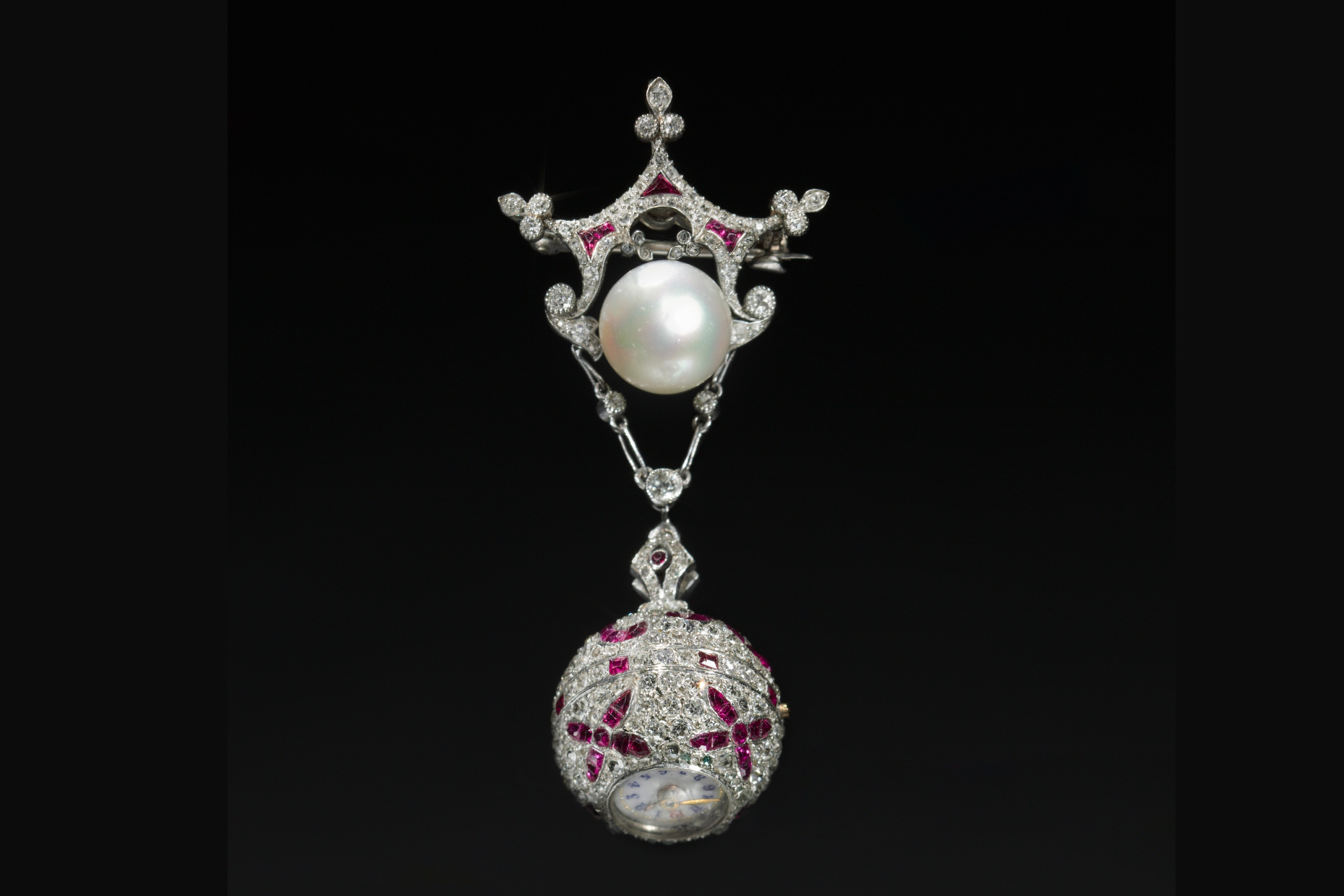
A Cartier watch pendant in platinum, set with diamonds and gemstones. (Image: Cleveland Museum of Art)
Charming royalty across the world
The first decade of the 20th century was an important time for Cartier. In 1904, the jeweller received its first royal certificate from King Edward VII of Britain, and soon started to supply many other royal courts including those of Russia, Spain and Siam (now Thailand). In the same year, Louis Cartier created what he believed to be the first ever wristwatch for aviator Alberto Santos-Dumont. Pierre, meanwhile, embarked on a journey to Russia; one that would prove profitable in commissions from its high society, but also as a source of inspiration that would shape Cartier’s jewellery designs.
In 1909, Pierre would switch his wanderlust to America, opening a Cartier boutique on Fifth Avenue in New York City. It would be the precursor to its famous flagship store further up the street; the purchase of which he would famously broker a decade later in exchange for a string of pearls. Back in London, his younger brother Jacques stepped in to take over its British branch, which that same year moved uptown to a prestigious Bond Street address, where it remains to this day.
As Cartier’s man in Britain – and, as such, jeweller to King George V – Jacques joined members of the aristocracy on a trip to India for the Delhi Durbar in 1911. It was an event to commemorate the coronation of the King, with two weeks of festivities during which King George V and Queen Mary would be proclaimed Emperor and Empress of India.
This adventure to an exotic new land would prove to be a seminal trip for the house of Cartier. Jacques’ love of travel and his sociable nature would win ground-breaking commissions from India’s rich, jewel-loving Maharajas and inspire a whole new category of jewellery, pioneered by Cartier and much copied by others.
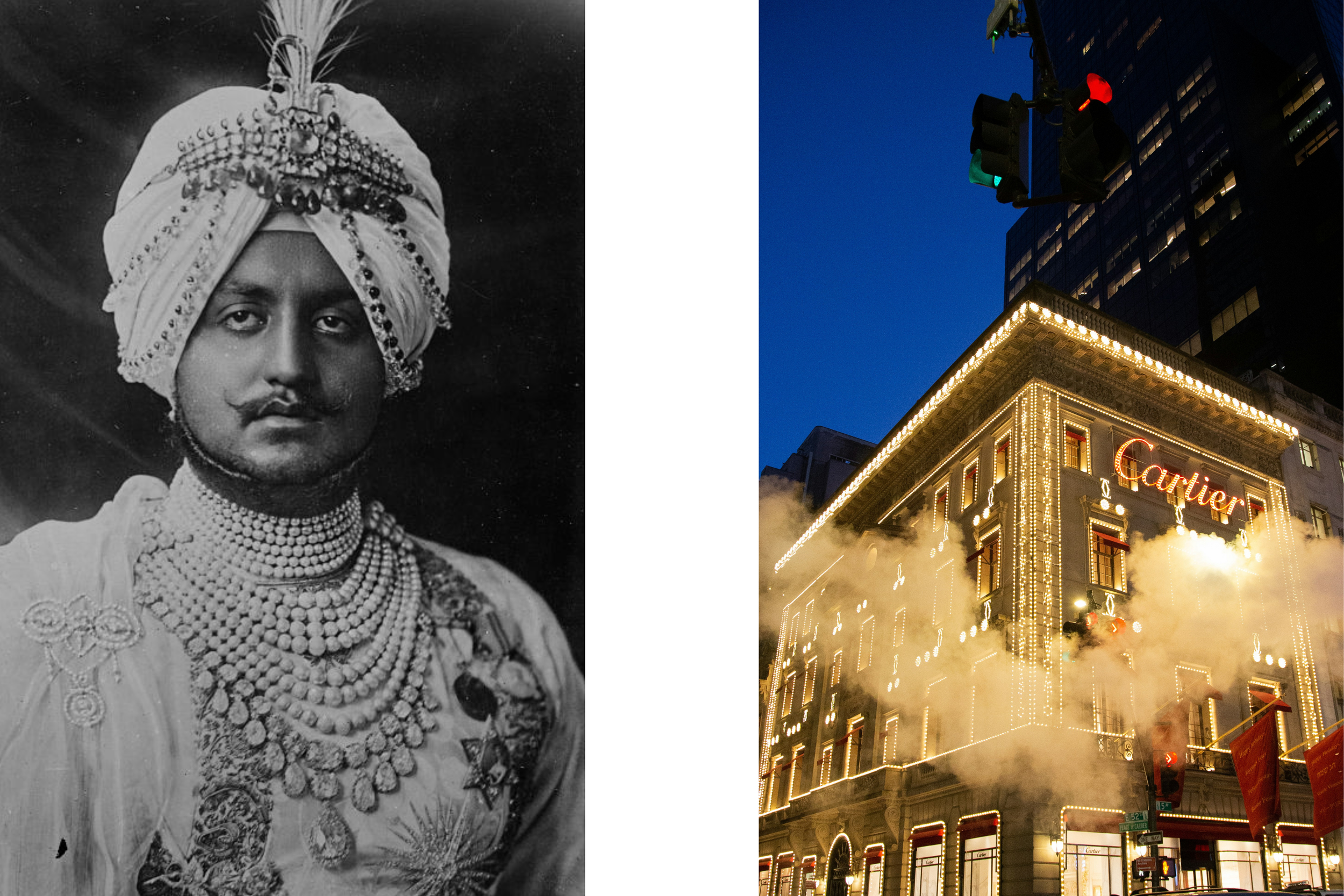
Maharaja Bhupinder Singh, who was a Cartier customer; the Cartier flagship store on Fifth Avenue, New York. (Images: Library of Congress; Kaydn Ito/Unsplash)
This article is an edited extract from the book Cartier: The Story Behind the Style by Rachael Taylor, published by Studio Press
Main image: A window display at a Cartier store. (Image: Arseny Togulev/Unsplash)