The origin story of Bulgari’s founder
Long before it became synonymous with bold gems, high jewellery and cinematic glamour, Bulgari began as a small Roman silversmithing business founded by a Greek immigrant
By Rachael Taylor
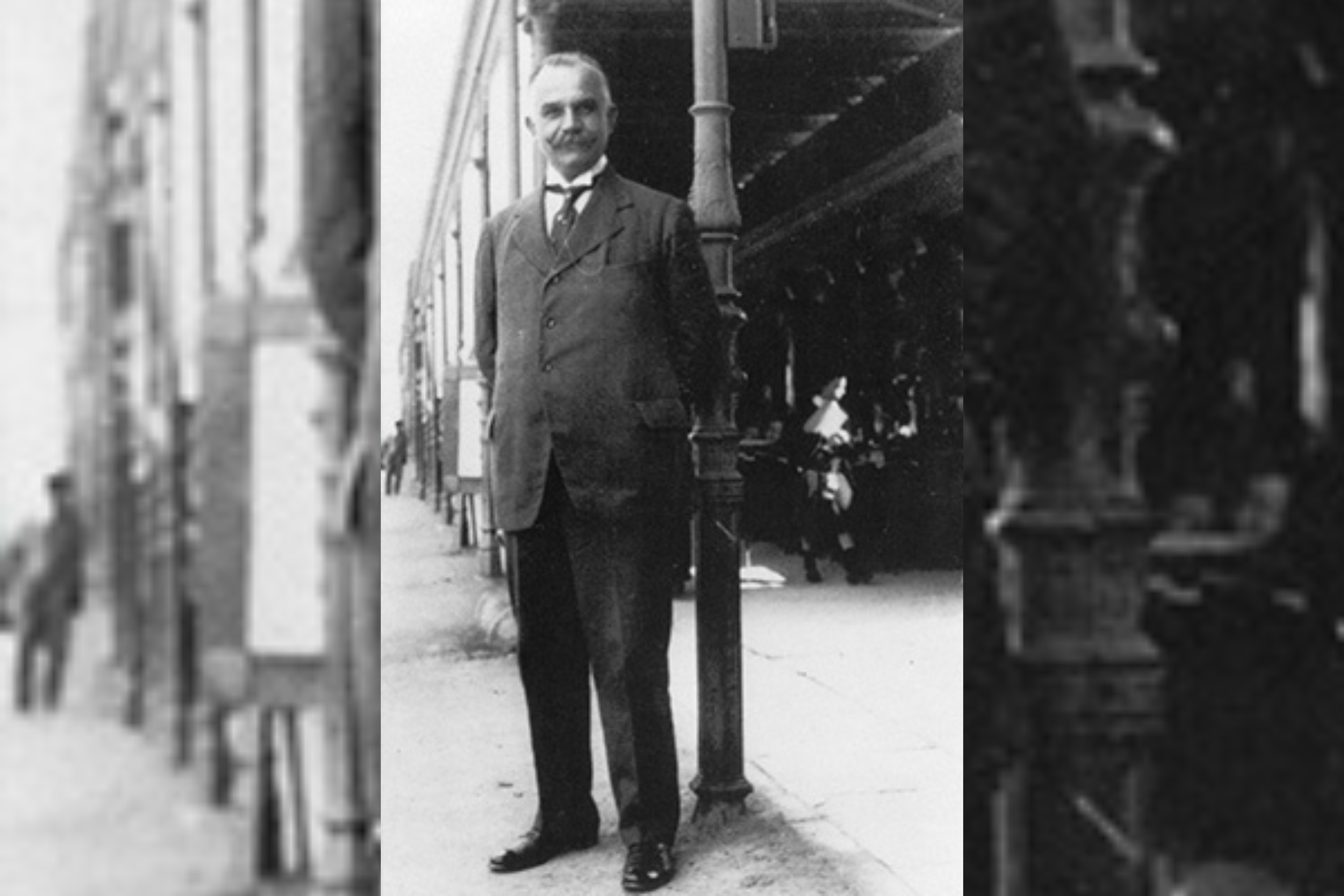
Sotirio Voulgaris is the founder of the most famous Italian jewellery brand of all time, yet his story does not start in Italy. It begins in Greece.
Sotirio was born on March 18th, 1857, in Paramythia, a small town in northern Greece that lies about 100km from the Albanian border. He was one of 11 children born to Georgis and Eleni Voulgaris, but, sadly, was the only one to survive. It seems that destiny touched the future jeweller from an early age.
Georgis Voulgaris was a skilled silversmith who had grown up in Kalarrytes; which at the time, was the largest silversmithing centre in the Balkans. Georgis’ father had also been a silversmith, and had introduced him to the business. When it came time for his own son, Sotirio, to learn the trade, it was natural for Georgis to take him under his wing. With his father’s steady guidance, the young Sotirio learned how to craft belts, earrings, sword sheaths and buttons, all made out of silver.
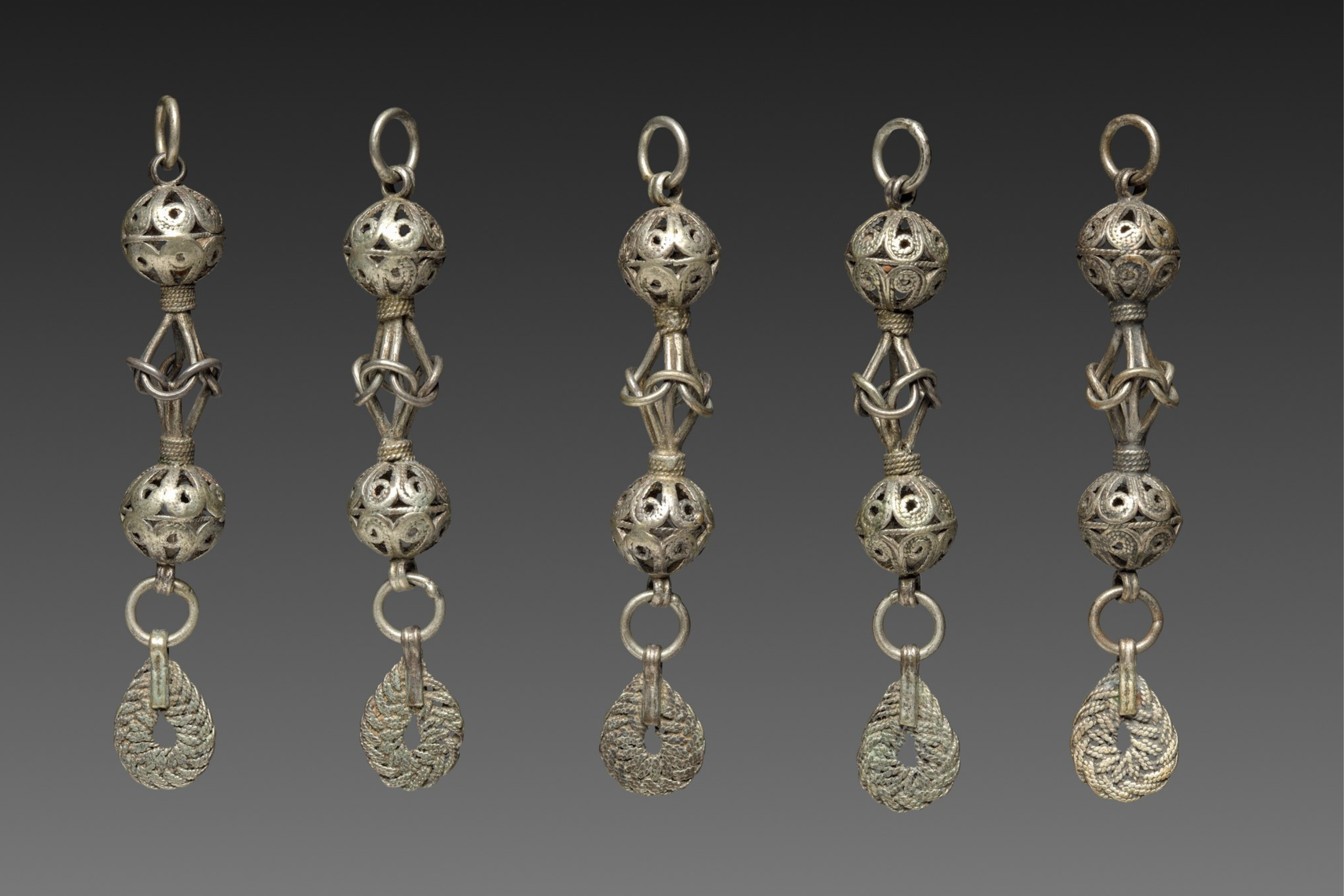
A set of silver buttons made in the Balkans during the 19th century. (Image: Cleveland Museum of Art)
Dangerous times in Paramythia
The family had a store in Paramythia from which they sold their goods. It should have been a safe and steady life, but the Voulgaris lived in an era of political tension. In 1873, the Epirus region, of which Paramythia was a part, was taken under Ottoman rule, and tensions were high between Turks and Greeks. A series of arson attacks took place to target Greek businesses, during which the Voulgaris’ shop was set ablaze.
Eventually, the entire village of Paramythia was burned to the ground – a purposeful move by its leaders so that the town could be rebuilt from scratch. The Voulgaris family, however, did not stick around for this promised new era. They left Paramythia, with Eleni moving in with relatives in Albania, and Sotirio and Georgis embarking on a nomadic life that never allowed them to spend more than a month in one place.
The Voulgaris continued to make and sell silverware during this time, but life on the road was dangerous. The winters in the mountains were bitterly cold, and they would often require protection from soldiers to transport their expensive goods from town to town.
In 1876, when Sotirio was 18 years old, he fell victim to an attempted robbery that scared him; it was the beginning of the end of his days as a travelling salesman. The following year, he and his father left the mainland and set up home on the island of Corfu. There, they opened a small workshop on ground floor of a house. Once they were settled, Eleni joined them, and the family was soon immersed in the life of the island.
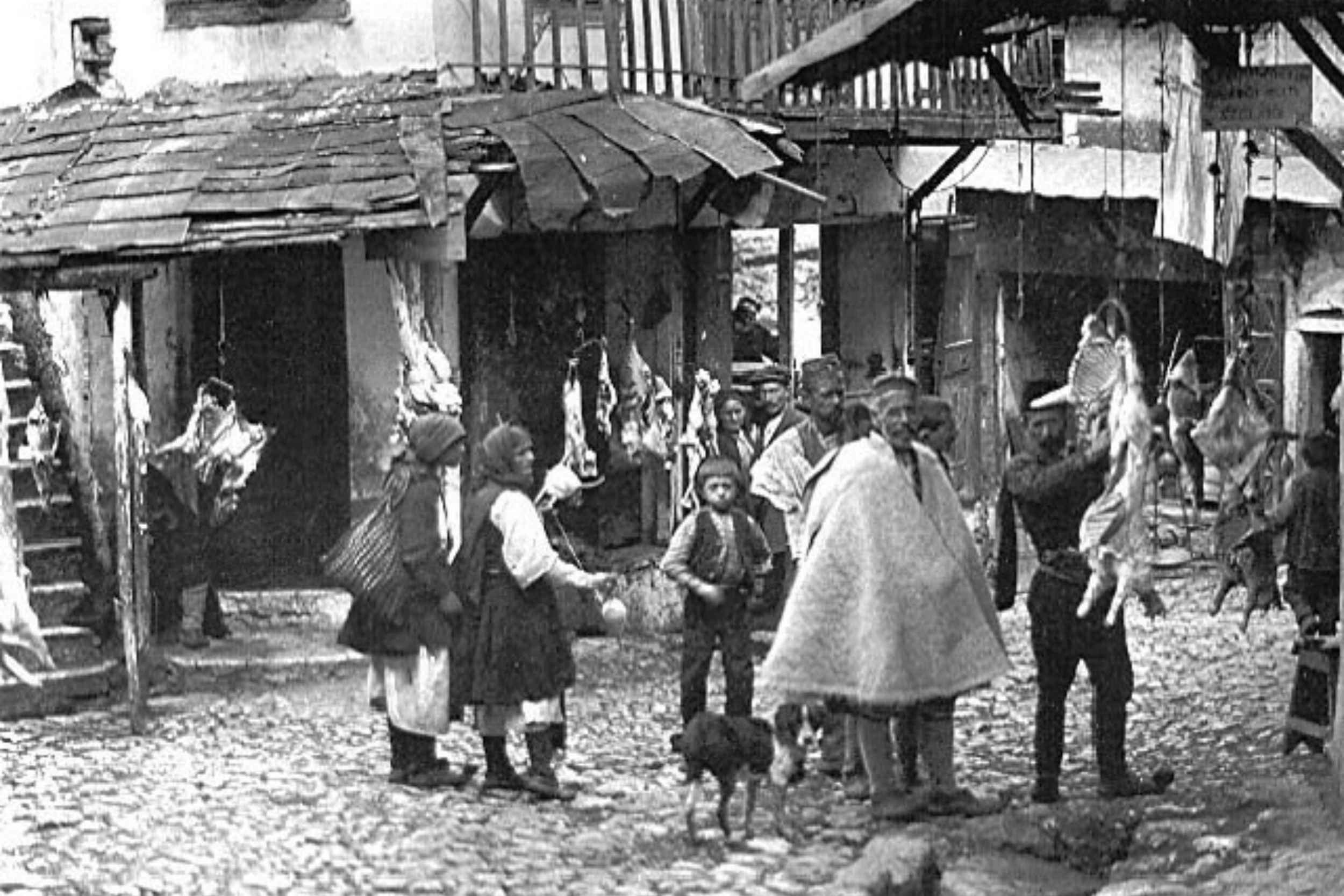
Shops in the centre of Paramythia, photographed in 1913. (Image: Frederic Boissonnas)
A formative friendship in Corfu
During his time in Corfu, Sotirio made a friend that would prove to be a catalyst for the next part of his life, a Macedonian silversmith called Demetrio Kremos. Things were going well for the Voulgaris family in Corfu, but young Sotirio felt restless, and Demetrio offered a solution. The Macedonian was on his way to Italy and persuaded Sotirio to join him.
In the autumn of 1880, the friends set sail for Brindisi, a port city on the very heel of Italy that faces out into the Adriatic Sea. From there, they travelled across the country to Naples, where the budding entrepreneurs set about building their fortune.
Both were skilled silversmiths, and they pooled their talent to open a store in Naples’ Piazza dei Martiri, a town square known for silverware sellers – it was the perfect landing spot. This good fortune didn’t last, however. One night when the business partners were out at dinner, the shop was broken into, and much of their stock was stolen. This led to them closing the Naples shop, and setting their sights on new beginnings in Rome.
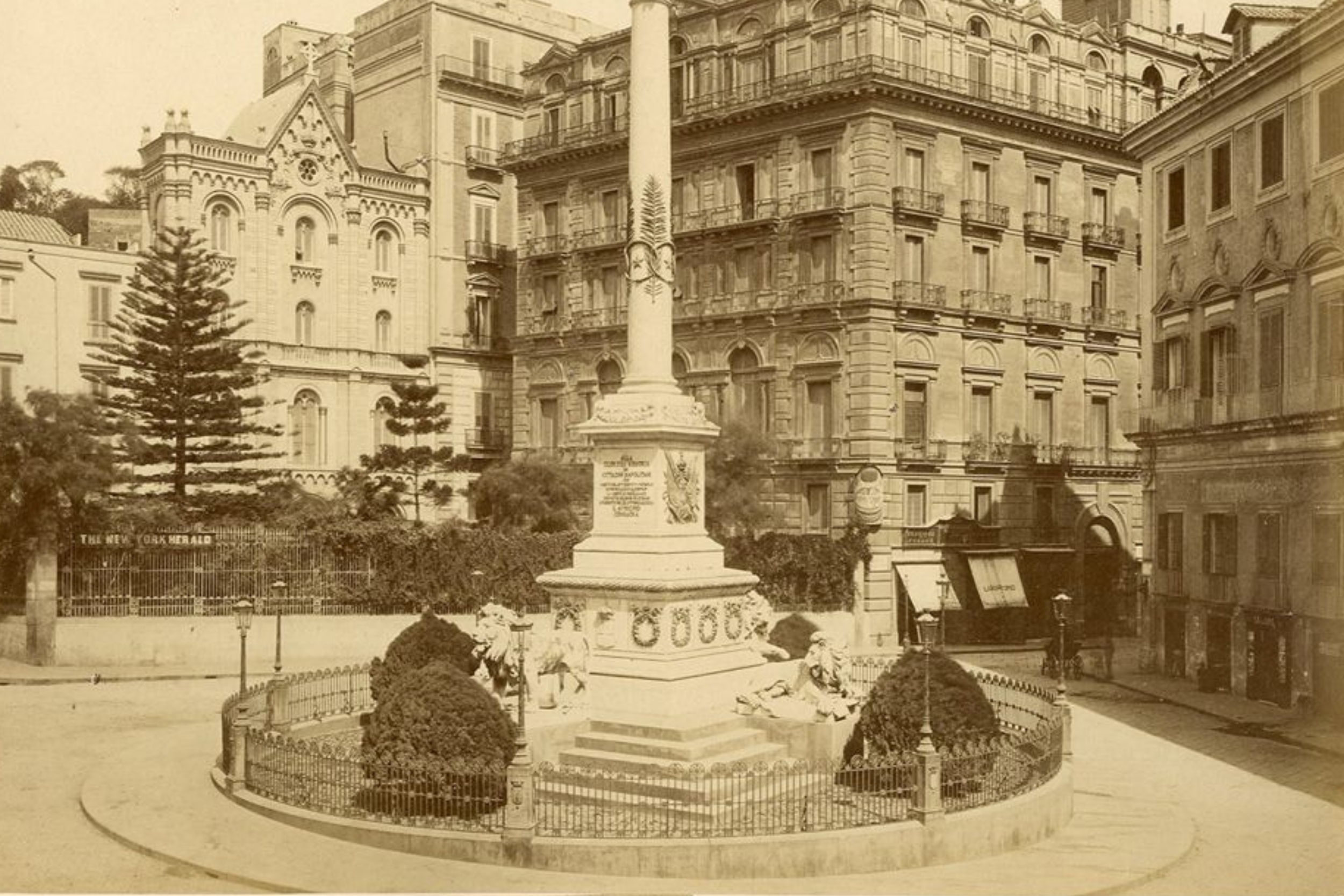
A postcard of Piazza dei Martiri in Naples, circa 1895. (Image: Wikimedia)
Landing in the Eternal City
On February 18th, 1881, Sotirio and Demetrio arrived in the ‘Eternal City’. Sortirio was 23 years old, and – following the robbery at his shop – had just 80 centesimi in his pocket. Pulling together what goods they had left, the pair started trading from a stall in front of the French Academy art gallery. The only problem was, they didn’t have a licence. They were caught and shut down by the authorities within three days, but the reward had been worth the risk. During that time, they had managed to make 200 lira. With the funds they had raised, the managed to set up a more legitimate business with. A store at 75 Via Sistina. Unfortunately, just as in Naples, the dream would be short lived. This time, the turmoil came from within, with the friends falling out over money, and parting ways.
Sotirio’s relationship with Via Sistina wasn’t quite over, however. He liked the street. It was populated by other Greek silvermiths, as well as other types of craftspeople and some art shops. He felt it was the right spot for him, and in 1884 he opened a store at 85 Via Sistina under his own name – almost. The trading name of the shop was S. Bulgari, an Italianised spelling of his last name chosen to help shoppers better pronounce Voulgaris.
Sotirio filled his store with silverware – chased salvers, spoons, goblets, belt buckles, chatelains. This mish-mash of silver attracted tourists visiting Rome. The city was a key destination at that time for European and American tourists embarking on so-called Grand Tours.
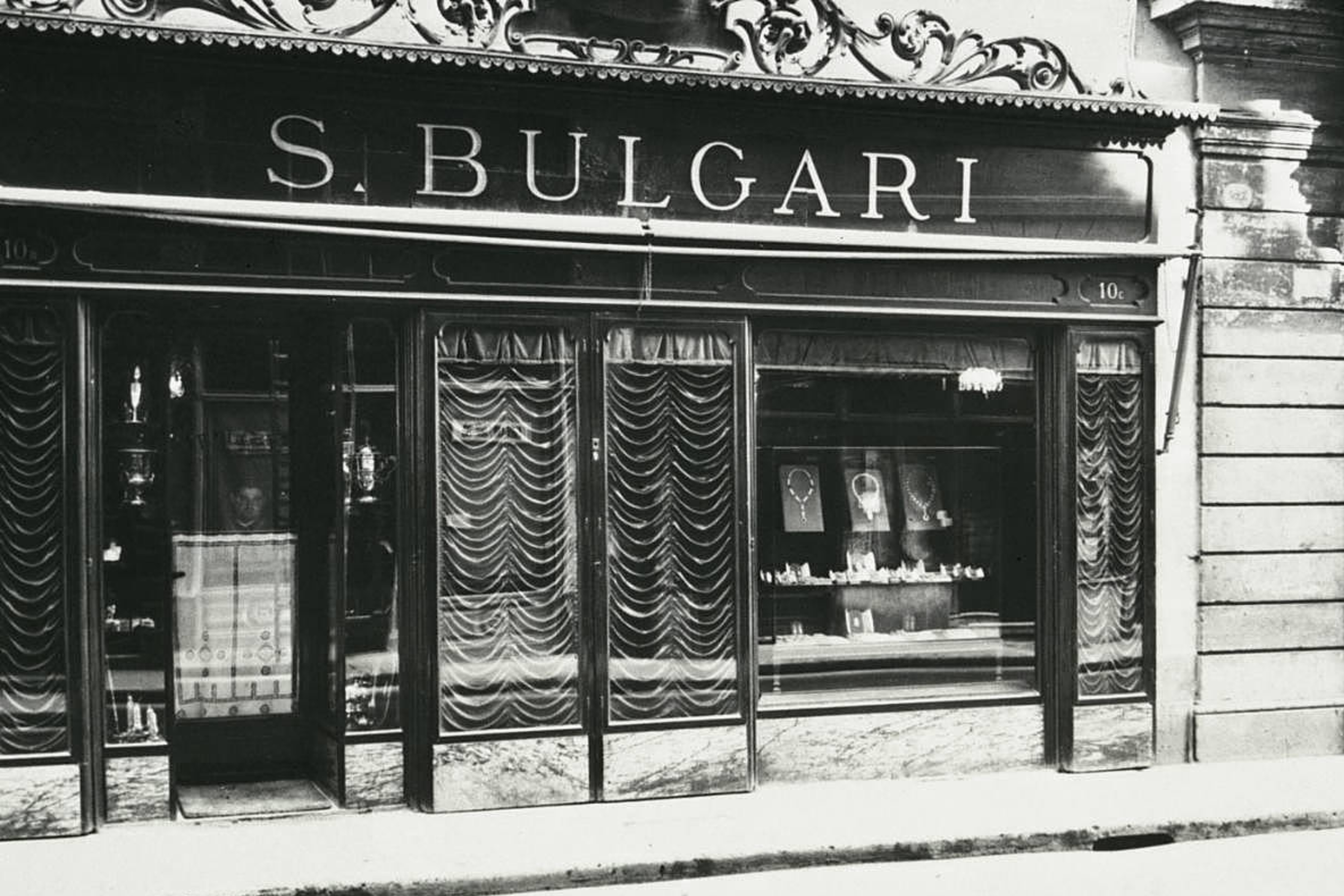
Bulgari’s first store in Via Sistina, Rome. (Image: Bulgari)
Fresh success
Four years into setting up S. Bulgari in Rome, Sotirio got married. Rather than a romantic Italian love affair, the union was instead a Greek arranged marriage. His bride, Eleni Basios, was the daughter of his parents’ neighbours in Corfu, and was just 17 years old when they wed.
Eleni and Sotirio would go on to have six children together, all of who were brought up in Rome. Constantino Giorgio was born in 1889, followed a year later by Giorgio Leonida and Maria Athena the year after that. In 1893, Sophia arrived and her sister Alexandra was born two years later. Then the couple was blessed with a final son, Spiridione, in 1897.
The family would be known by the Bulgari surname.
This article is an edited extract from the book Bulgari: The Story Behind the Style by Rachael Taylor, published by Studio Press
Main image: Bulgari founder Sotirio Voulgaris. (Image: Bulgari)