An orphan who became the king of watchmaking
The remarkable tale of Hans Wilsdorf, the man who built Rolex and Tudor, and ushered in the modern watch industry
By Rachael Taylor
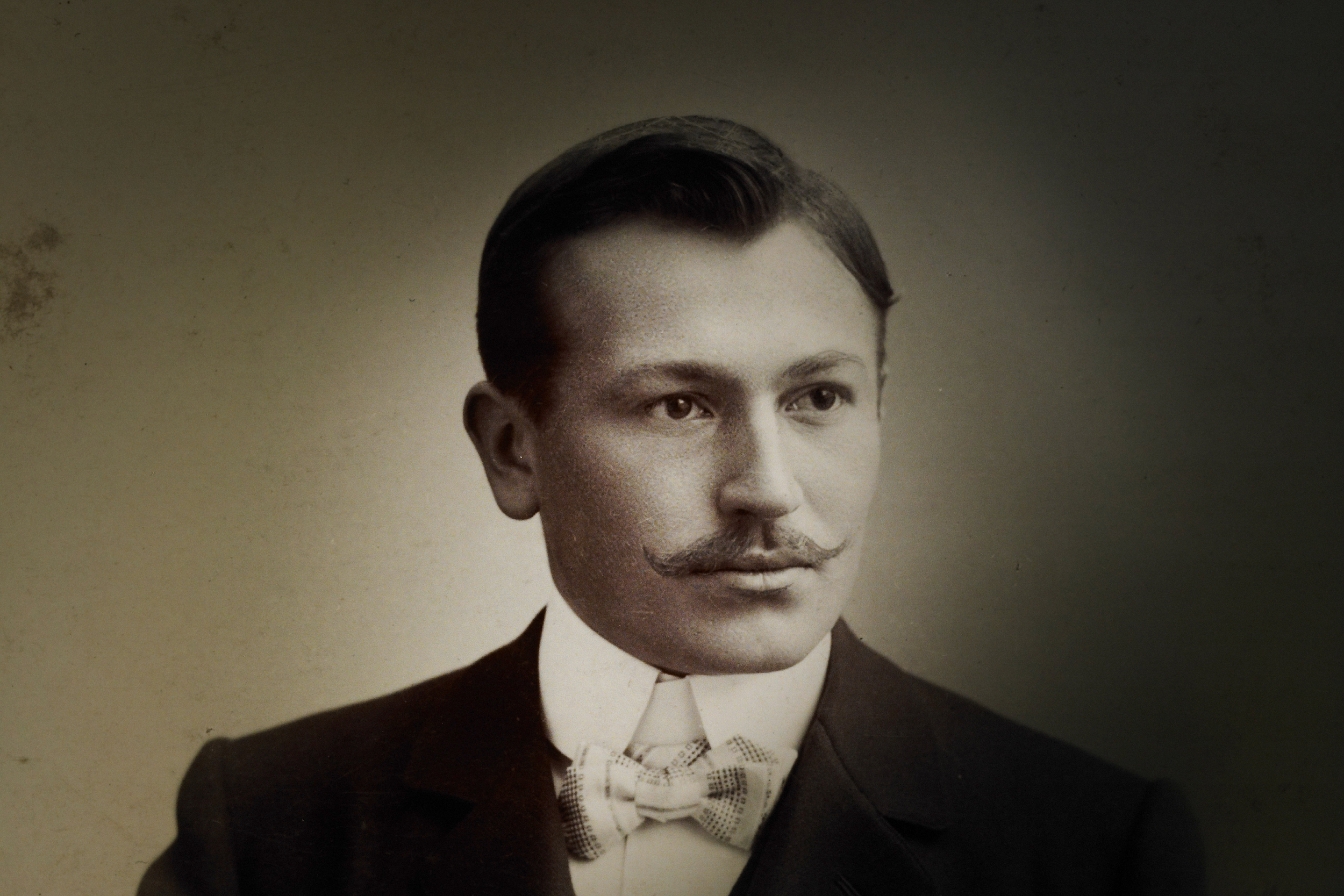
To tell the history of Rolex, we must start with a man rather than a watch. Hans Wilsdorf, who would go on to build what is arguably the world’s most famous luxury watch brand, was born in the Bavarian town of Kulmbach, Germany, in 1881 to Anna and Johan Daniel Ferdinand Wilsdorf.
The Wilsdorfs owned an iron toolmaking business, which had been started by Hans Wilsdorf’s grandfather. It was a successful enterprise that had provided a comfortable life for Wilsdorf, his older brother and younger sister. It was a happy and stable life until tragedy struck when Anna and Johan died months apart. By the time he was 12 years old, Wilsdorf was an orphan.
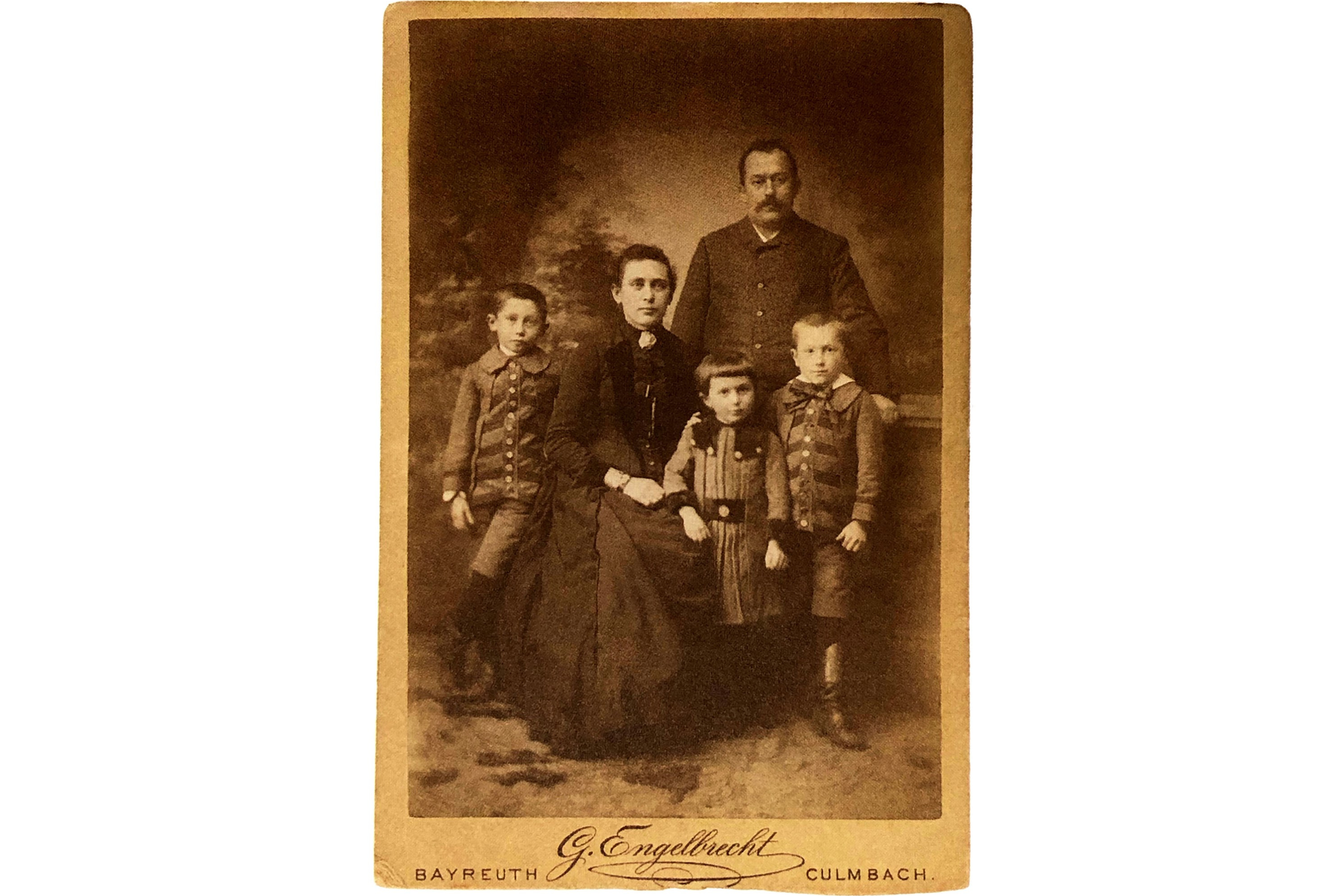
Hans Wilsdorf (front row, right) standing in front of his father, with his mother sitting down between his sister and brother, in 1887. (Image: Wikimedia Commons)
Early lessons in self-reliance
Anna’s brothers stepped in to steer the fate of the young children, and it was decided that the toolmaking business that had belonged to their father should be sold to provide a financially stable future for them. Once this had been completed, the children were sent to elite boarding schools for the remainder of their childhoods. Wilsdorf was educated 45 kilometres away in Coburg, where he showed an interest in mathematics and foreign languages, becoming fluent in English.
Although this was an upsetting chapter in his life, Wilsdorf credits these events with giving him the strength of character required to be successful in the future. In an autobiography he wrote as part of a series of four books titled Rolex Jubilee Vade Mecum, published in 1946, he reflected: “The way in which [my uncles] made me become self-reliant very early in life made me acquire the habit of looking after my possessions and, looking back, I believe that it is to this that much of my success is due.”
Gleaning pearls of wisdom
Wilsdorf’s first foray into the world of work was an apprenticeship with a prominent pearl exporter in Geneva that sold to businesses across the world. The experience that he gained in this role would prove vital when setting up his own business, and he described it as being “invaluable throughout my career”. One of the lessons learned was that it was possible to build a business around products others had made, which would be the founding idea for his initial watch business.
In 1900, Wilsdorf moved to La Chaux-de-Fonds, a town in the Jura mountains – an area of Switzerland that is synonymous with watchmaking. He took a job with major watch exporter Cuno Korten, which was his introduction to the world of horology. While his main role was corresponding with the English market, another of his duties at Cuno Korten was to keep its warehouses of pocket watches in working order. To do this, he had to manually wind hundreds of pocket watches each day. It seems little wonder after this experience that he would later become obsessed with the quest to create a self-winding watch movement.
Beginning life in London
After two years in the Swiss mountains, Wilsdorf returned to Germany to complete mandatory military service. He did not return to Switzerland upon its completion in 1903 but instead moved to London and took a job with a watchmaker. He also met and married his first wife at this time, an English woman called Florence Crotty, and became a British citizen.
Two years later, at the age of 24, Wilsdorf was ready to strike out on his own, and in 1905 he opened his own watch business in partnership with his brother-in-law Alfred Davis. The company, which had its offices at 83 Hatton Garden in London, was called Wilsdorf & Davis and specialised in sourcing Swiss movements and placing them within English-made cases.
At that time, pocket watches were the mainstream method of timekeeping. Wristwatches did exist but were not common, and were considered to be a women’s accessory. Indeed, the first wristwatches were made for women, as their dress at that time didn’t allow for the comfortable wearing of pocket watches, since they didn’t have pockets.
Wilsdorf was a visionary in this respect. He believed in the potential of wristwatches, and correctly forecast that this smaller, more wearable product would one day make the larger pocket watch obsolete. He set about trying to change the image of wristwatches.
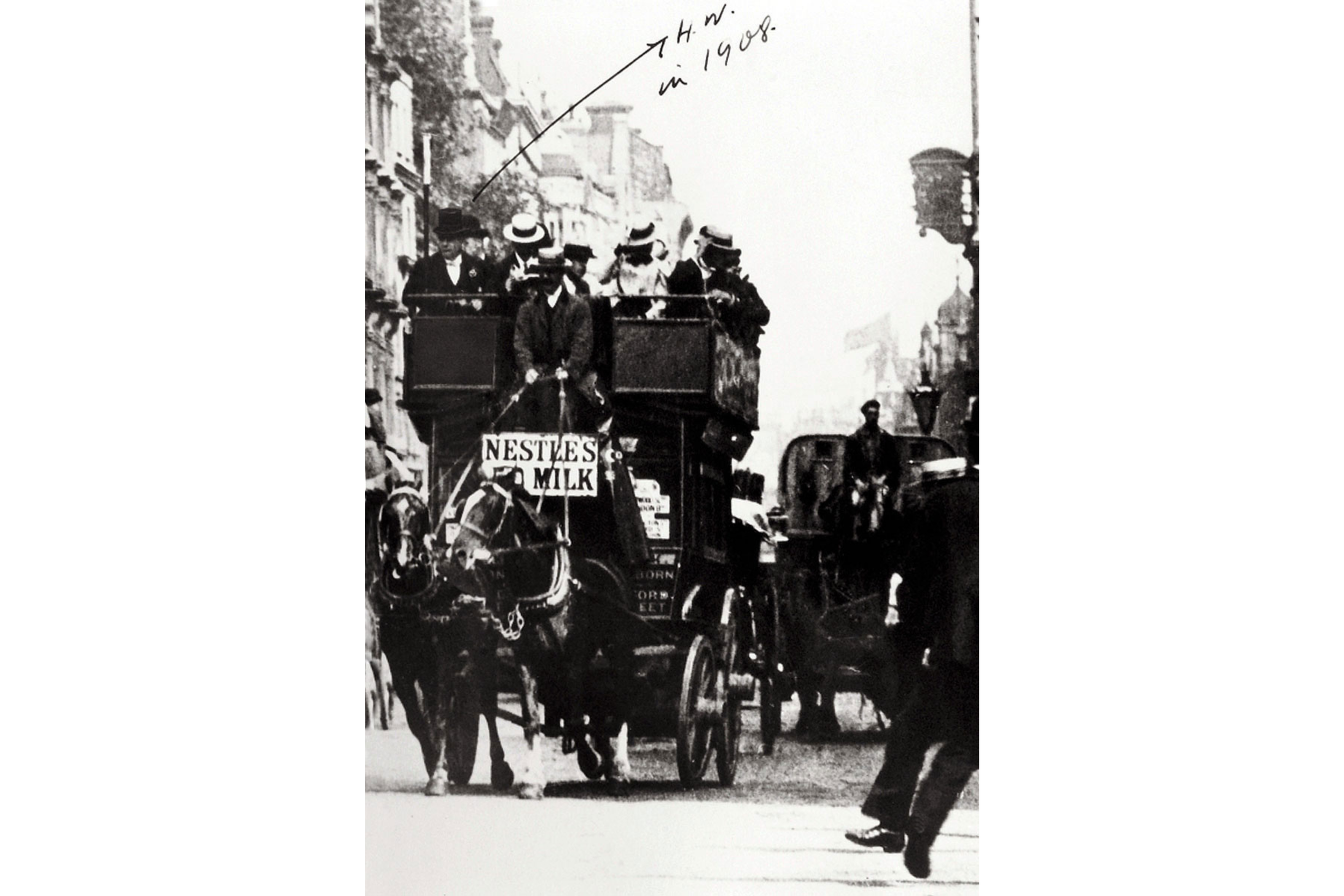
Hans Wilsdorf riding a London omnibus in 1908, similar to the one on which he dreamt up the name ‘Rolex’. (Image: Wikimedia Commons)
The birth of Rolex
A fundamental step was finding a manufacturer called Aegler in the Swiss town of Bienne that was making small, precision movements that could fit inside a wristwatch. Wilsdorf placed a large order, and soon Wilsdorf & Davis became one of the leading British wristwatch firms.
In a bid to establish his business as a brand rather than simply a dealer, Wilsdorf wanted to create a new name for the company; a catchy one that would look good on a dial and be easy to pronounce in many languages. He had experimented with many combinations of letters in search of this made-up name but failed to find anything that worked. Then, while riding through London’s Cheapside on the upper deck of a horse-omnibus in 1908, it came to him. Or as he would later jest: “A genie whispered ‘Rolex’ in my ear.”
Under this new name, Wilsdorf continued his quest to create reliable wristwatches with quality movements. In 1910, Rolex had a breakthrough when one of its products, powered by an Aeglar movement, became the first wristwatch in the world to receive the Swiss Certificate of Chronometric Precision – a mark of horological excellence. Four years later, another milestone would be achieved when the Kew Observatory in London awarded a Rolex wristwatch with a Class A precision certificate. This had previously only been given to marine chronometers used for navigation, and it further solidified the reputation of Rolex as a purveyor of precise timekeeping instruments.
Back to Switzerland
In 1914, World War I broke out, and the following year the British government introduced a 33.3% customs duty as part of the war effort. By this time, Rolex’s London office, which had a staff of 60 people, was exporting its watches all over the world and the tax change would make that difficult. As such, Wilsdorf made the decision to move the company to Bienne in Switzerland. It already had an office in La Chaux-de-Fonds, which it opened in 1917 for marketing purposes, but this move would remove it from the British watch industry altogether.
And, so, the legacy of Rolex’s Swiss-made watches began, with the Swiss company Rolex S.A. registered in Geneva in 1920.
This article is an edited extract from the book Rolex: The Story Behind the Style by Rachael Taylor, published by Studio Press
Main image: A portrait of Hans Wilsdorf. (Image: Alamy)