How the King of Diamonds got his name
From cotton to diamonds, the story of empire-building jeweller Charles Lewis Tiffany
By Rachael Taylor
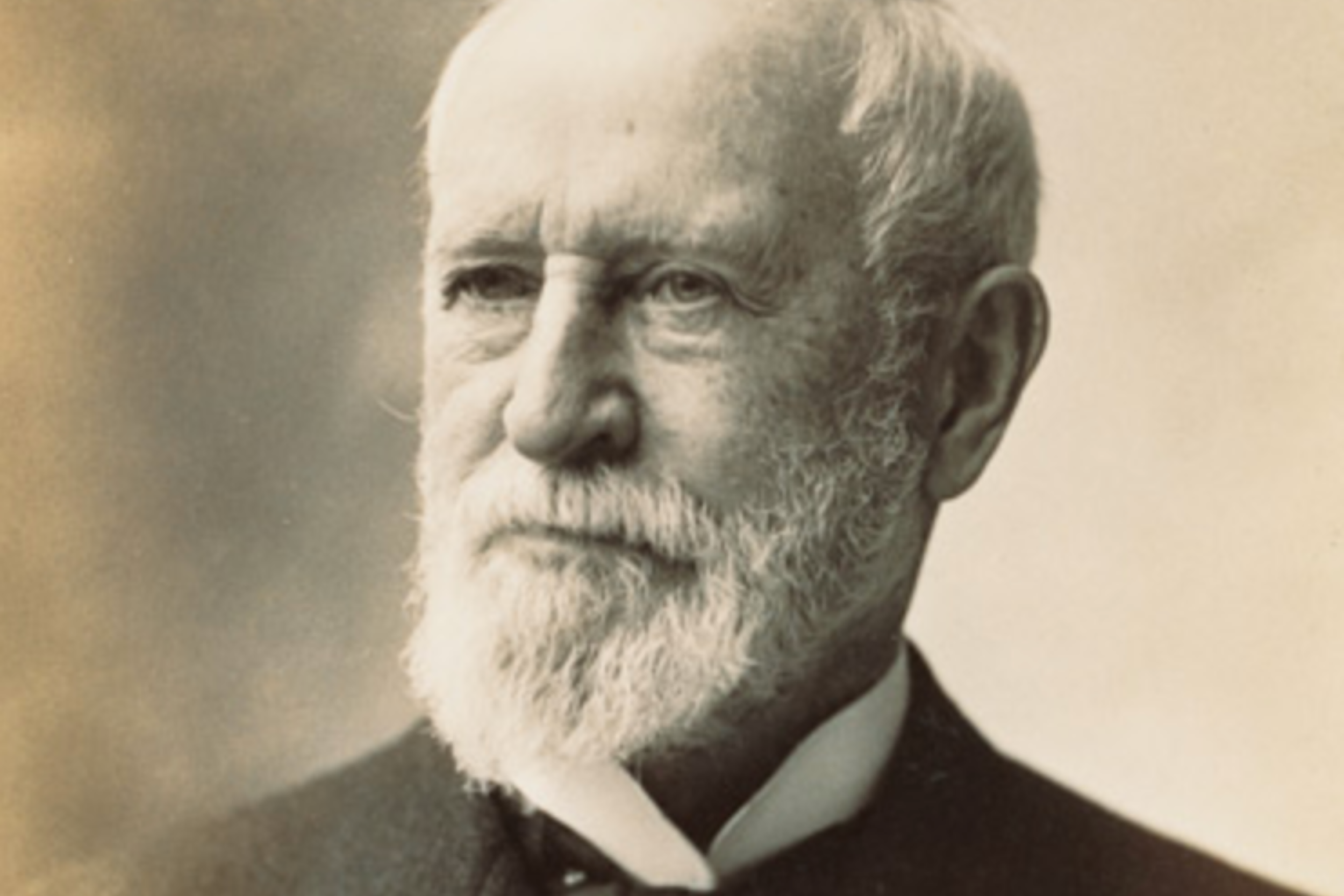
Charles Lewis Tiffany, the man who would go on to win the moniker of New York’s ‘King of Diamonds’, did not hail from a long line of jewellers. His start in life was a more modest one in Connecticut, making his ascendence to high society all the more glittering.
Tiffany was born in 1812 to Comfort and Chloe Tiffany, and grew up in the small town of Killingly. The major business of the town was the production of cotton goods, and the Tiffany family owned a manufacturing company. Tiffany was educated at local schools in the area before joining his father in the family cotton business.
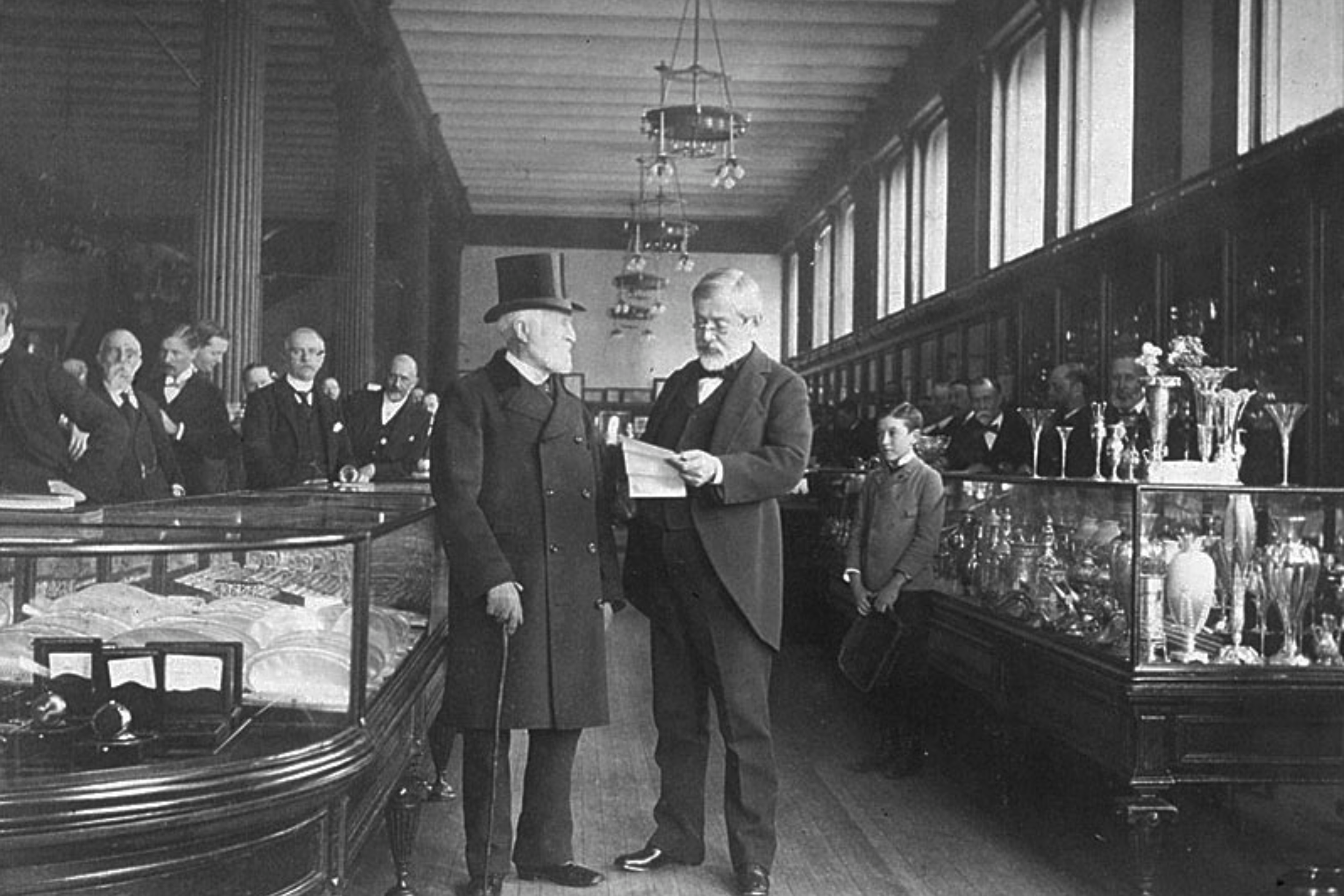
Charles Lewis Tiffany (left) in his store, about 1887. (Image: WikiMedia Commons)
New York City beckons
By 1837, Tiffany felt restless. No longer satisfied by working at home with his family, he began to envision how he could make his own mark in business. He teamed up with a school friend, J. B. Young, and the duo set in motion a plan to open a stationery store in New York City. With a $1,000 loan from Comfort Tiffany, the ambitious 25-year-olds made the 150-mile journey south. The store, named Tiffany & Young, opened its doors at 259 Broadway that same year, and on its first day $4.98 rang through the tills.
Tiffany & Young soon began to expand its remit, stocking glassware, cutlery, porcelain, clocks and jewellery, and began to develop a reputation as a purveyor of fine goods of taste. In 1841, the business expanded with the addition of a third partner, J.L. Ellis, and was renamed Tiffany, Young & Ellis. The trio expanded the store, doubling it in size by renting the adjacent unit, and continued to increase the quality of the goods they sold, with Young making buying trips to Europe to pick out fine examples of English and Italian jewellery.
It was, in fact, political events in Europe that would be the making of this American luxury success story. In 1848, the status quo trembled as republican revolutionaries sought to topple European monarchies and strip aristocracies of their power and wealth. It was a societal upheaval known as the Springtime of Nations. More than 50 countries were impacted by this, but none more so than France, where the monarchy was overthrown and replaced with a republic.
Such widespread panic and disruption had an impact on the price of diamonds, and Tiffany, Young & Ellis swooped. By now, the firm was manufacturing its own jewellery, and the opportunity to pick up diamonds at low prices put them at an advantage. The rocking of the aristocracy also loosened some important gems – the kind of which had never been seen in America before – and Tiffany secured a number of important heirlooms, including the collection of Hungary’s Prince Esterhazy.
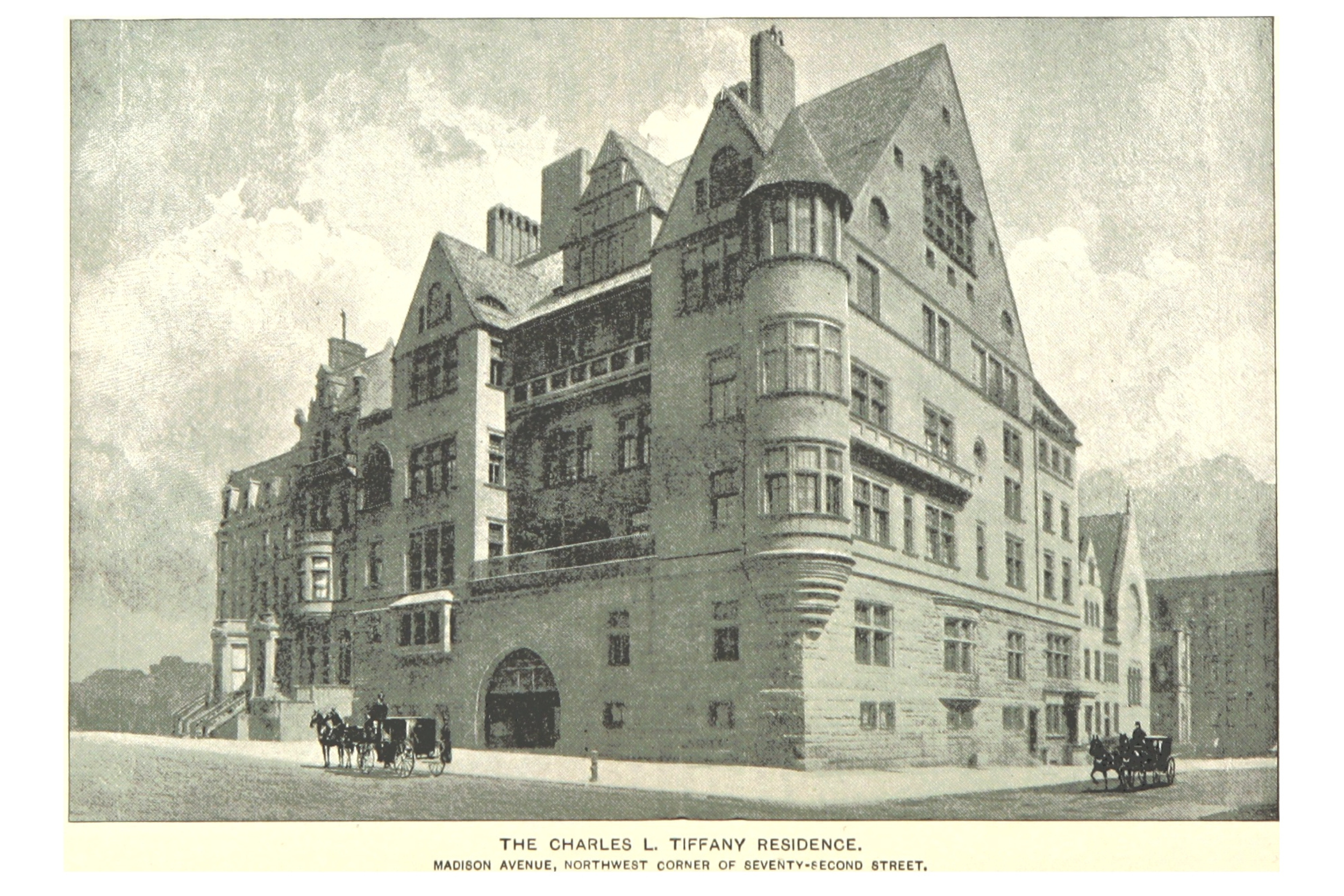
The Tiffany family residence at Madison Avenue and 72nd Street was an Gilded Age mansion built between 1882 and 1885. (Image: WikiMedia Commons)
Building a jewellery empire
In 1853, Young and Ellis decided to retire from the business, but Charles Lewis Tiffany was far from finished. He found new partners to work with, and the business was, at this point, renamed Tiffany & Company.
Tiffany would go on to build his empire, grabbing headlines along the way. By the 1860s, the business was well established as an emporium of choice for the rich and the famous, both for its jewellery and its top-quality silver – it was the first American company to adopt the superior 925 standard used by the British. In 1862, President Abraham Lincoln purchased a seed pearl necklace and earrings from Tiffany & Co for his wife Mary Todd Lincoln, who wore them to her husband’s inauguration ball.
In 1870, Tiffany & Co moved into a large new store in New York’s Union Square, marking the beginning of a major decade for the jeweller; one in which Charles Lewis Tiffany would earn his moniker The King of Diamonds.
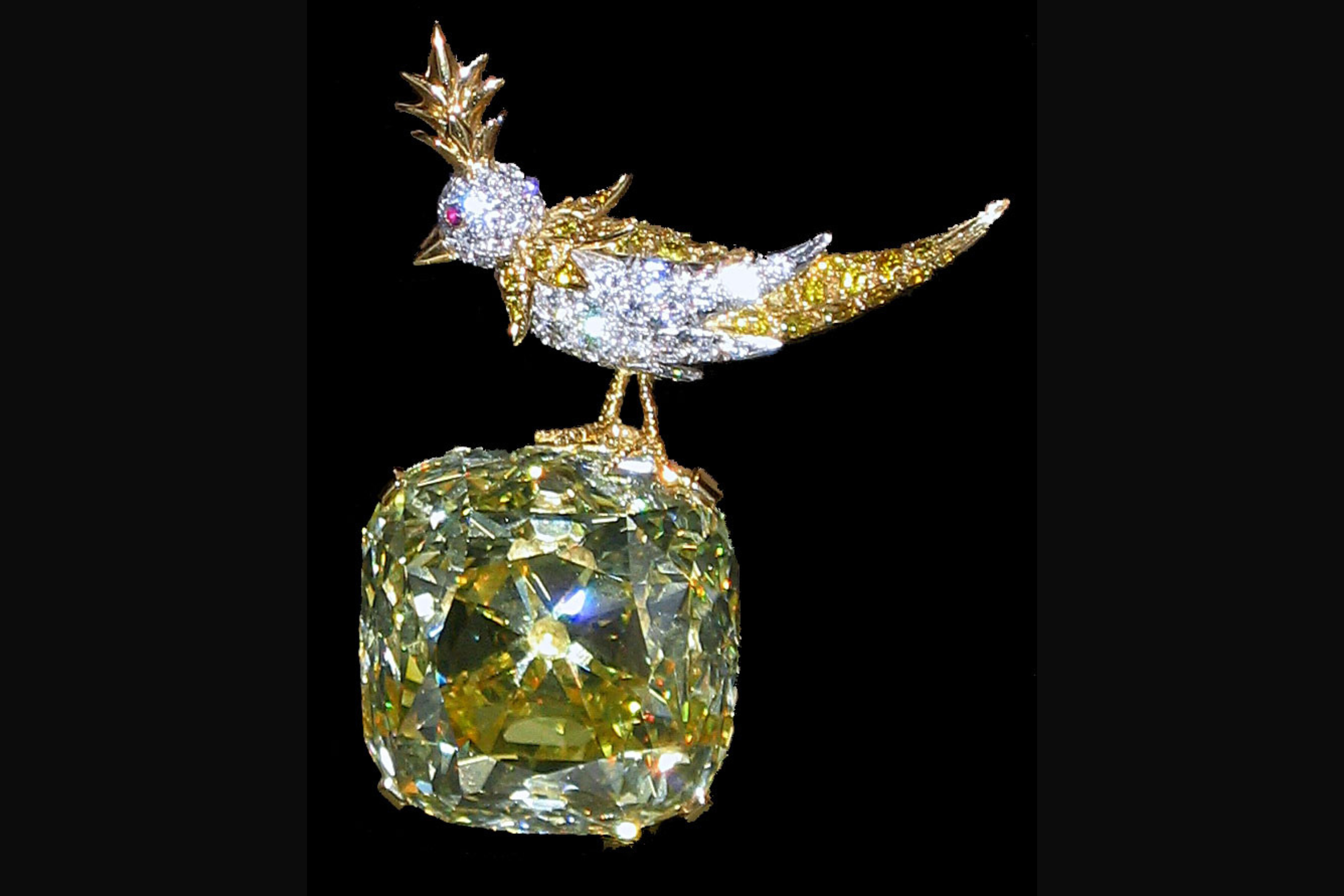
The Tiffany Diamond, mounted here with the jeweller’s signature Bird on a Rock. (Image: WikiMedia Commons)
The dicovery of the Tiffany Diamond
It was a single purchase that would truly jettison Tiffany into the high jewellery stratosphere – a 287.42ct rough fancy yellow diamond. When cut and polished, what emerged was a diamond of staggeringly enormous proportions for a rare yellow diamond of that quality. It weighed 128.54ct and was named the Tiffany Diamond.
If the purchase of this now world-famous stone, which is on permanent display at Tiffany & Co’s Fifth Avenue store in New York, signalled Tiffany’s intentions to dominate the diamond market, his ground-breaking invention eight years later sealed the deal. Seeking to celebrate the beauty of diamonds, Tiffany designed an engagement ring in 1886 that remains a sought-after classic to this day.
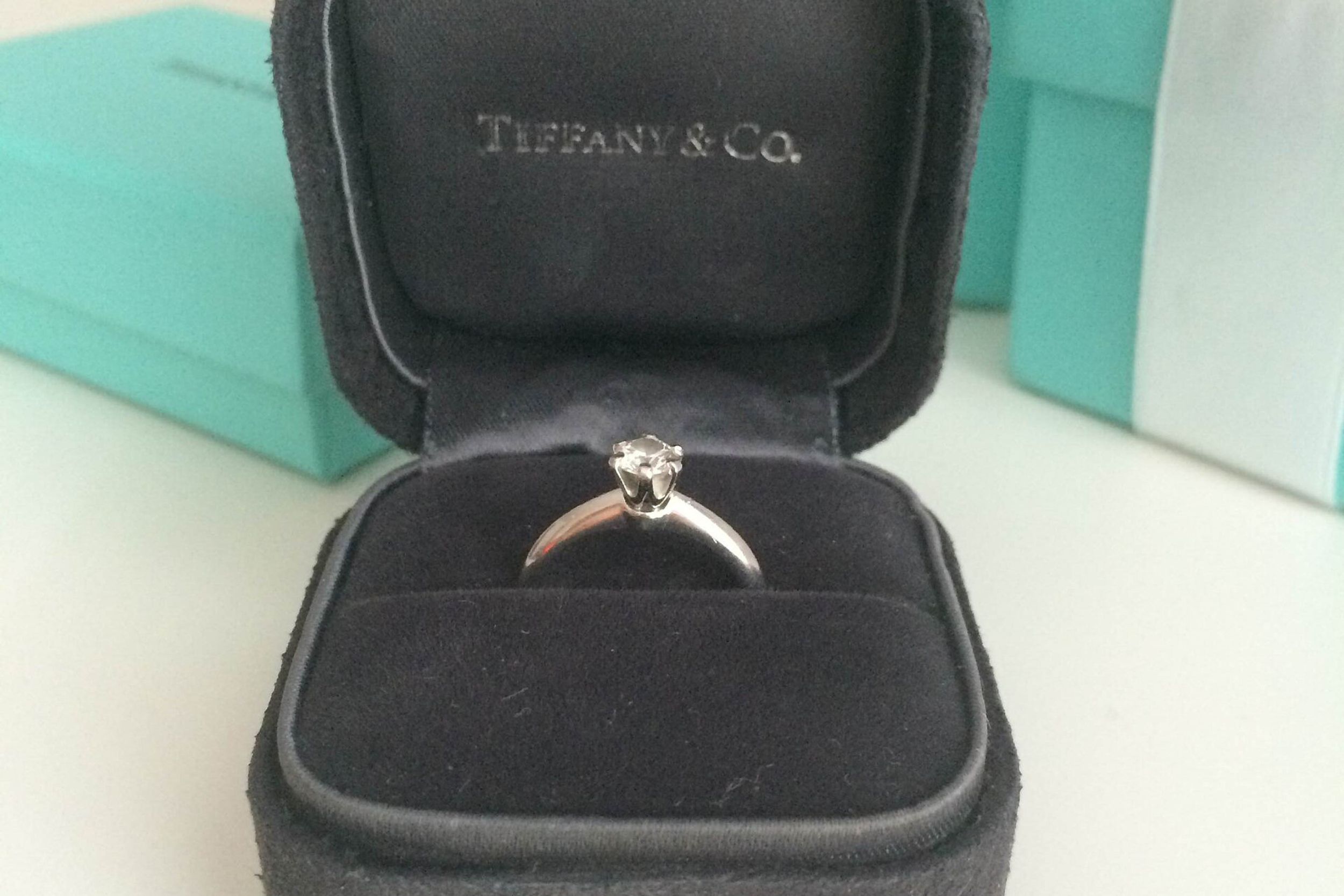
A Tiffany Setting solitaire engagement ring. (Image: WikiMedia Commons)
The ring that launched a million marriages
The Tiffany Setting engagement ring kicked back against the over-fussy designs of the time with a clean, minimalist band and a six-prong setting that lifted the diamond above the ring. The purpose for this innovative setting was to allow light to flow through the stone, and therefore maximise the sparkle. It was a huge hit, and the iconic design has become synonymous with engagement rings.
Just 15 years before his death, the King of Diamonds pulled off a final coup. The aftermath of the French Revolution that had gifted Tiffany an abundance of important gems in 1848 and, as such, its early credibility in high jewellery circles, rumbled on. In 1887, the French government was masterminding a plan to sell off the crown jewels of its fallen monarchy. Outwardly, it claimed that a democracy such as France had no need of “objects of luxury, devoid of usefulness and moral worth”. The rumour mill suggested that it was in fact afraid of a power grab by Bourbons, Orleanists or Bonapartists, who might use ownership of the jewels to claim a right to rule.
Taking the throne
Tiffany cared little for this political posturing, but he did see an opportunity in it. That year, he travelled to Paris to attend the auction of the French crown jewels at the Louvre. He sat in the audience, ready to make his bids, along with fellow jewellers, including a young Frédéric Boucheron, and Orleanists, members of the French royal family, whose pockets proved too shallow on the day to win back their family heirlooms.
When the final strike of the gavel cracked across the sales room, Charles Lewis Tiffany had in his possession close to a third of the historic crown jewels. He placed them in specially crafted red leather boxes, embossed in gold with the words Diamants de la Couronne, translating from French as Crown Diamonds. Inside, impressed on the silk lining in the lid, was Tiffany & Co New York and Paris, thus securing Tiffany & Co’s place in the history books as a purveyor of royal jewels and his own coronation as The King of Diamonds.
This article is an edited extract from the book Tiffany & Co.: The Story Behind the Style by Rachael Taylor, published by Studio Press
Main image: A portrait of Charles Lewis Tiffany. (Image: WikiMedia Commons)