In memoriam: Celebrating the life of Philipp Wolf IV
From his school days in Malmö to founding Customline and laying the foundations of WOLF, this is the story of a boxmaking pioneer
By Rachael Taylor
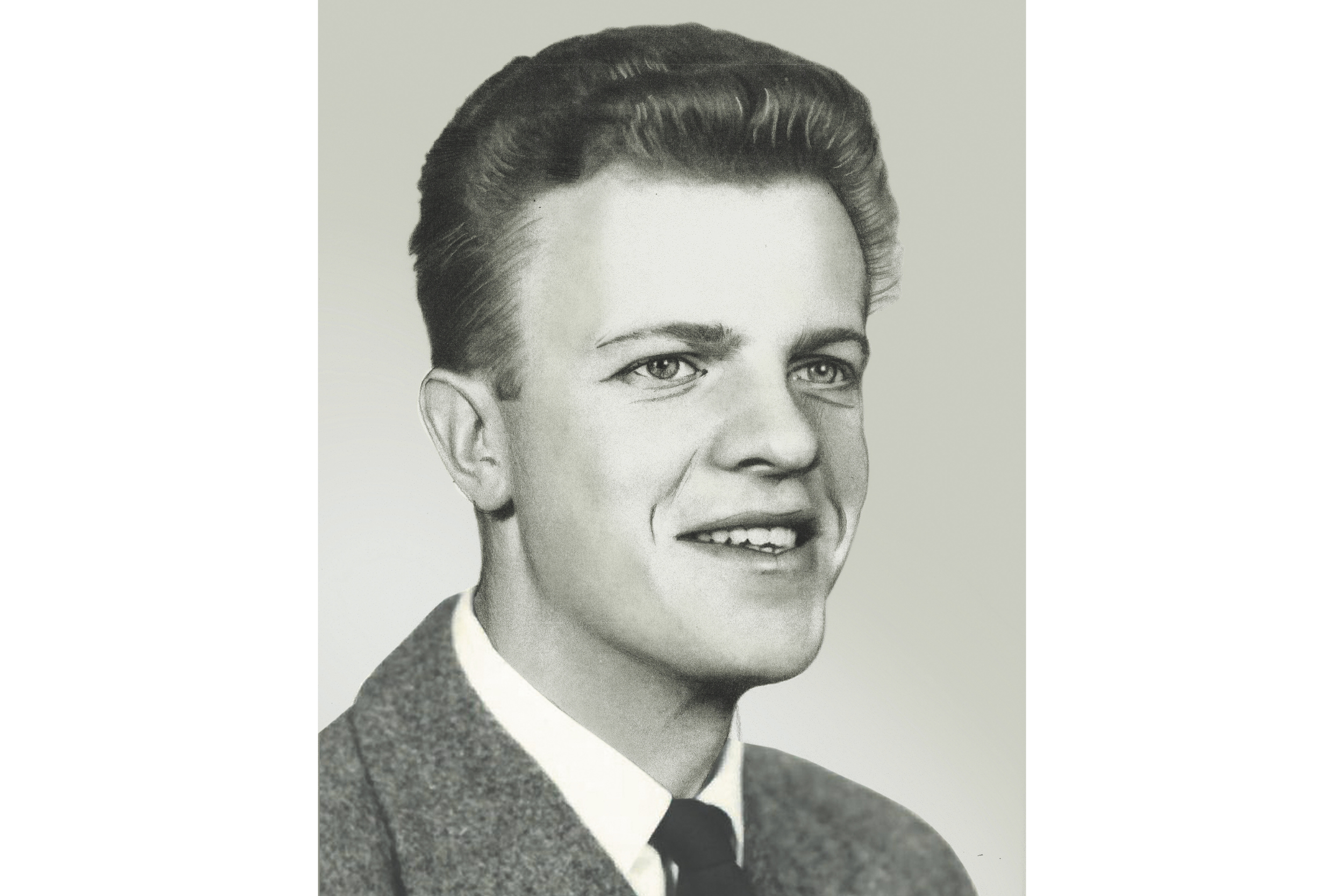
Philipp Jamie Miguel Wolf – known within the Wolf family lineage as Philipp IV – was born in Malmö in the winter of 1936, the first of Greta and Philipp III’s children. He grew to be a curious and rebellious boy, more likely to be found at the city’s docks engaging sailors in conversation, than in school where he ought to be.
The sustained truancy forced Philipp III’s hand: he sent his son to be schooled in England. This decision of a father at his wits’ end would be the first step in taking the Wolf family and business to a brand-new country.
Philipp IV was not displeased by the move to England. In Sweden, his roguish attitude in the classroom had led to incidents of corporal punishment. While teachers had been banned from beating children in Swedish secondary schools by 1928, the practice was still lawful in elementary schools up until 1958.
It was this degrading treatment that had led to the young Philipp IV’s truancy. Rather than face the wrath of his teachers, he hid at the docks during school hours. There, he watched the boats and tried to make friends with the sailors. He had a fascination with the water that would lead to him spending much time at sea in later years. When it came time for the school bell to ring, Philipp IV would sneak home in the hope that his mother didn’t notice he’d been skipping classes.
On his move to England at the age of 12, Philipp IV was sent to live with Mr and Mrs King in Chester. The elderly couple knew Philipp III through the Swedish Salmon and Trout Association, and gladly took in his son as a lodger. Philipp IV attended a nearby all-boys school, which proved to be a safe space in which he could flourish. At last, he began to enjoy school – especially during cricket season.
In his new home with the Kings, he also found comfort. In Sweden, he grew up in a difficult atmosphere. His father could often be unkind, and his mother – though always the life of the party – had a troubling relationship with alcohol; the pair would divorce when Philipp IV was 16. In contrast, Mr and Mrs King provided a simple stability.
They also had a son-in-law, who was a colonel in the English Army. He took a special interest in the family’s new charge, and Philipp IV looked up to him. He would take the time to teach the young boy skills, and Philipp IV enjoyed trying to please him by mastering each command, which included cleaning his car each week to the exact fastidious standards the colonel specified.
A creative life
When school finished, it was time for Philipp IV to leave England, heading home to Malmö and the family business. Military service also awaited him there. Sweden introduced mandatory conscription for all 18-year-old men in 1901, requiring them to undertake basic military training. It is a practice that continued up until 2010, and it is estimated that 4 million Swedes took part.
Philipp IV spent 10 months doing his military service in 1956, completing his basic training and then undertaking a posting as a loader and driver within the tank regiment of the Swedish Armed Forces. The military life didn’t call to him, however, and once his mandatory service was up, he set out on a new, more creative adventure.
In 1957, Philipp IV hopped onto his Vespa and drove from Malmö to Hamburg in Germany. It was a 500km journey, and one that he make several more times by scooter. In Germany – the country where his ancestors had first started out as boxmakers in the 19th century – Philipp IV studied art at Hochschule für bildende Künste Hamburg (HFBK Hamburg) in the Uhlenhorst district of the city.
Philipp IV and his brothers Richard and Vincent would all turn out to be creatives, taking after their mother Greta, who was an artist and pianist. Philipp IV found a talent for painting, and also music. He is a talented guitar player, and performed with bands right into his 80s. Richard, meanwhile, was a world-class ballet dancer in his youth. Vincent, the youngest of the brothers, is an extraordinary pianist who can deliver spellbinding renditions of Rachmaninoff. He is also a keen linguist who has mastered six languages, including speaking and writing Russian.
The creative souls of the three brothers, at times, clashed with the demands of a family business helmed by a father who could be stern. All of three worked for Philipp III at some point, but each had their route of escape.
While Richard left Malmö to tour the world with dance troupes for months at a time, Vincent moved to Geneva. He was still working for Skandinaviska Etuifabriken, but did so remotely in Switzerland; although his stint as a salesman didn’t last long. Family lore recalls Vincent striking back at his father, who he didn’t get along with, by driving his van full of samples up to the edge of Lake Geneva, and then ejecting them all into the water. He would, instead, become a carer, and eventually settled in Bern, Switzerland.
As for Philipp IV, though he would be the one to carry the torch of the Wolf boxmaking dynasty, he found a way to do it on his own, far enough from his father’s gaze to allow him some freedoms.
A return to England
After his studies, Philipp IV returned to Malmö and his father, but he would soon make a new life for himself away from Sweden. His father sent him to England to work for a paper, printing and packaging company in Bristol called E. S. & A. Robinson, where he had contacts. The company was one of the largest in the world, and one of its major products was branded paper bags for shops. By 1930, it was producing 25 million of these per week.
E. S. & A. Robinson was also an early advocate of employee rights. In 1889, it granted employees with at least a year’s service a week of paid holiday, which was revolutionary at the time. In later years, the business would forge the way again by introducing pensions and profit-sharing schemes.
Philipp IV enjoyed his time at E. S. & A. Robinson. He was undertaking an apprenticeship of sorts, and spent time learning about the different machinery the factory used. It was also a sociable workplace at which he made a lot of friends, which would in turn lead to him finding love.
His love story started with a party. By 1960, Philipp IV had moved back to Malmö, but he was in England visiting friends in Bristol who were having a gathering. The tall, fair, good-looking 24-year-old Swede walked into the room, sharply dressed in white shoes, with a guitar slung over his back; he cut quite the figure. For fellow party guest Judith Felicity Payne, who went by the name Judie, it was love at first sight.
The feeling was mutual, and the pair started a short, intense long-distance love affair, with him living in Sweden and her in England. By the time they married that same year, they had only met in person seven times. It would prove to be a rash but right decision. Judie and Philipp IV stayed together for their whole lives, and had three children together.
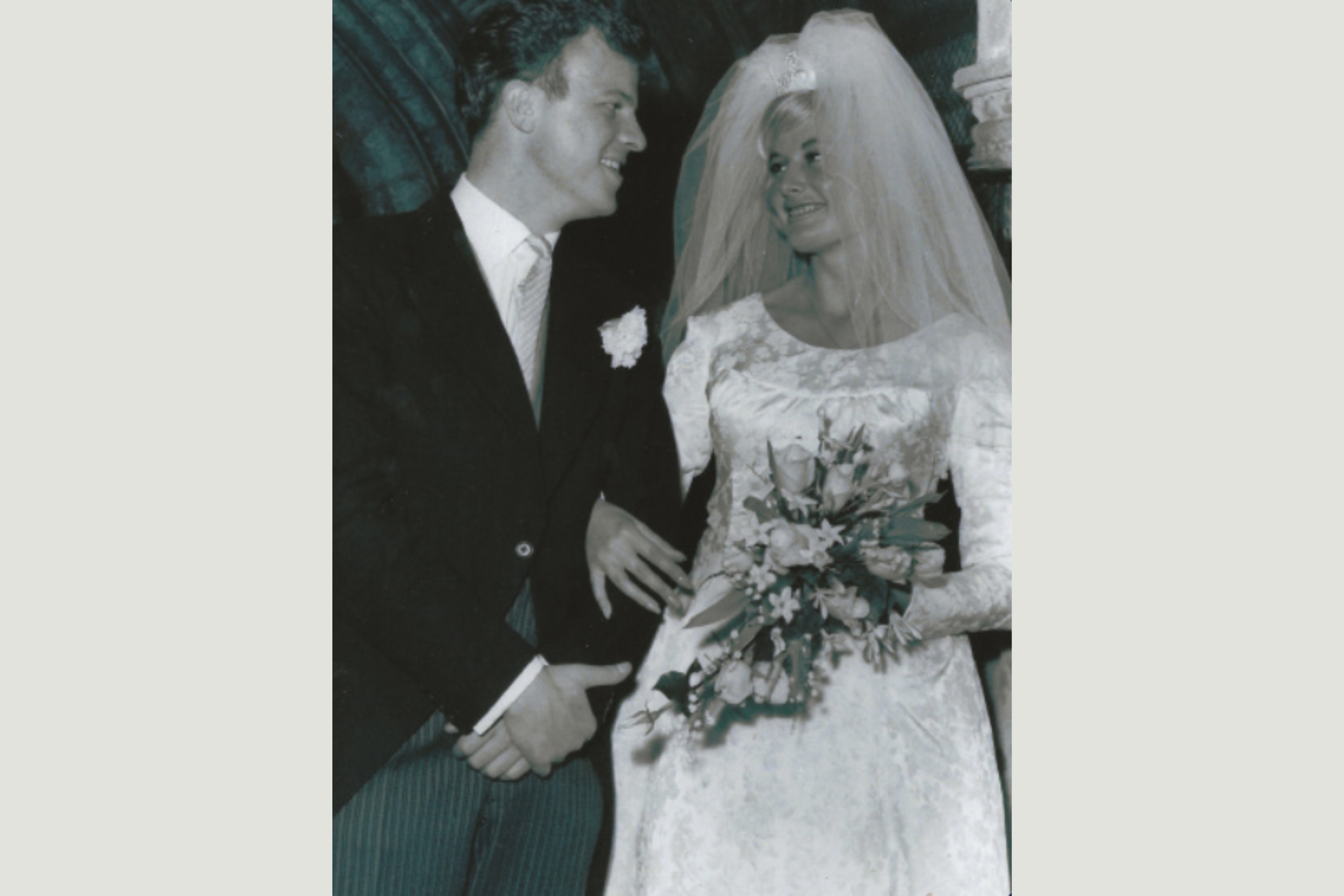
Philipp and Judie Wolf on their wedding day in 1960.
After they were first married, the newlyweds stayed with Judie’s parents in Clevedon, North Somerset, and Philipp IV set up an office in the shed in the garden. They would only stay there for six months, however, because in the January of 1961 the couple moved to Ireland to set up a new business.
A new Wolf enterprise
Philipp III had learned of financial incentives to be found in Ireland, and had tasked his son with setting up a factory there. In the early 1960s, Ireland was heavily focused on trade liberalisation as a way to boost the economy, and offered businesses tax relief and industrial subsidies in exchange for setting up enterprises in the area.
Ennis, a market town in County Clare in the mid-west of Ireland, was the chosen location, but it would be a short-lived experiment. Philipp IV struggled to get the right calibre of staff for the Irish factory. Also, the newly wed Wolfs were not enjoying their new life in Ireland. There was one spot of joy during their Irish sojourn, however. They welcomed a baby daughter, Nina Wolf, who was born on July 8th, 1961.
By the August of 1961 – seven months after moving to Ennis – Philipp IV, Judie and baby Nina left Ireland for good. The factory was closed down, and they returned to Clevedon to live with Judie’s parents for a short spell.
But opportunity would come knocking again very soon. Philipp III sent word of another location for a factory: this time in Llanelli, South Wales.
It was decided that the family would not move to the location of the factory, as they had done before. Instead, they set up a family home in Caterham, Surrey. While Judie and Nina settled into their new life there, Philipp IV would commute back and forth to Wales to get the factory up and running. He would often do so by plane, which he would fly himself.
Philipp IV was a confident pilot, and owned a number of planes, including a 1942 Beechcraft Staggerwing, and a more modern Piper Twin Comanche. He would even sometimes fly between England and Sweden to pick up his grandmother, Ida Wolf, who spent summers with he and Judie in England.
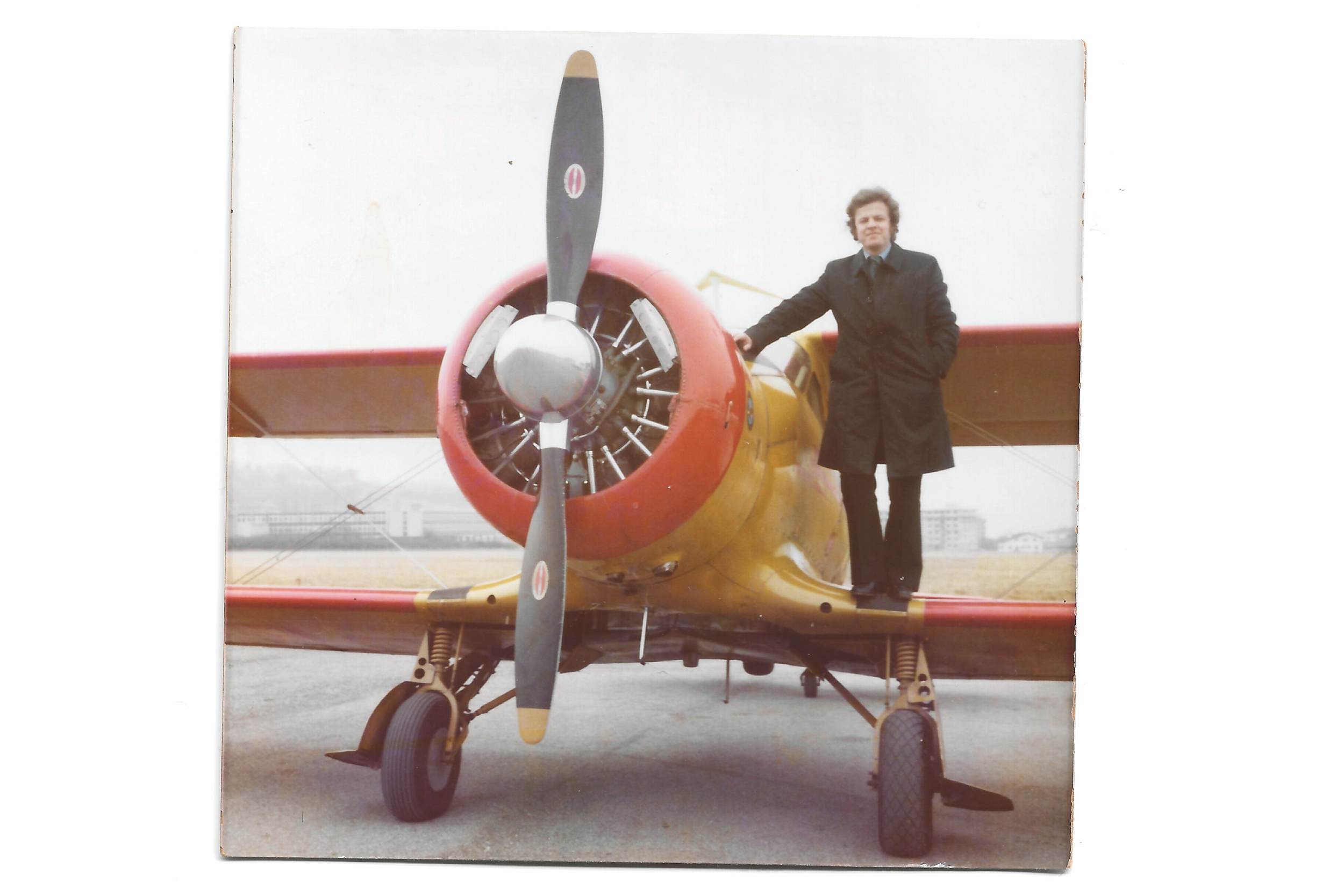
Philipp Wolf IV at Geneva airport in 1975, on the day he bought himself a Staggerwing plane.
Fresh success
Though the Irish factory had failed, the Welsh factory, built in 1967, was a huge success. It adapted many of the technical innovations that were developed in the Skandinaviska Etuifabriken factory in Sweden, but it also brought something new to the wider Wolf family business. Due to the traditional boxmaking techniques it used, the Swedish factory could only make boxes in certain sizes. In Wales, the boxes were made using injection moulding, which meant more flexibility in what it could create. This would be a key factor to the business securing contracts with clients looking for more unusual sizes and shapes, or custom designs.
The Swedish and Welsh factories worked symbiotically, splitting orders, with each producing the type of product that it was best suited to. While there was familial cohesion, the Welsh factory came under the purview of the British business, which was called Customline; and Philipp IV set out to make it stand on its own two feet.
Philipp IV turned out to be a not just a visionary product designer but a skilled salesman too, and his engaging personality meant he was fantastic at building relationships. He also cleverly looked outside of the family’s traditional customer type to find new business.
One of Customline’s first major customers was cigarette-lighter brand Ronson. Philipp IV won the attention of the managing director E. Lowrie through innovation and dogged determination. He decided that he would win him over by presenting him with a new product display idea every week. True to his plan, Philipp IV started regularly turning up at Lowrie’s office with a fresh handmade display concept for its lighters. The bolshy strategy worked, and Lowrie fell for the Swede’s charm and grit. By the early 1970s, Ronson was a huge account for Customline.
Others would follow: Argos, Green Shield Stamps, Estée Lauder. As well as providing displays for these customers, Customline also worked with major companies, including Tupperware, on supplying jewellery boxes for staff incentive schemes. These would often be showcased in staff catalogues, with staff able to choose which products they would like to receive as a reward.
Philipp IV then targeted jewellers and high street retailers. He would sign up H Samuel, Ernest Jones, Timex, House of Fraser, Debenhams, Marks & Spencer, and more. It seemed as if every store on the high street was selling his products.
A major retail coup came in 1968 when Philipp IV won over the buyers at London department store Selfridges. They had been impressed by Customline’s product offering, as there was no competitor on the market offering jewellery boxes and accessories to that standard. Under the Design Philipp branding, the company opened a concession in Selfridges that proved to be highly successful. It also achieved what is a dream come true for any brand: a special showcase of its products in the iconic Selfridges windows that look out onto Oxford Street.
Another iconic British moment would come courtesy of two politicians. On April 9th, 1975, Ronald Reagan, the governor of California, was visiting London and made a stop at the office of Margaret Thatcher, Leader of the Opposition. It was the politicians’ first one-to-one meeting, and it took place in the House of Commons.
Reagan and Thatcher described themselves as having a shared sense of purpose and warm regard for one another; they would go on to correspond for many years, sending each other hundreds of letters as Thatcher became the British Prime Minister in 1979 and Reagan the President of the United States in 1981. To mark this good will, they exchanged gifts on that first private meeting. Reagan brought with him a silver dollar medallion for Thatcher, while she presented him with a pair of silver cufflinks shaped like bears, in reference to the grizzly bear on the Californian flag. The cufflinks she handed over to the future world leader were held within a Design Philipp box.
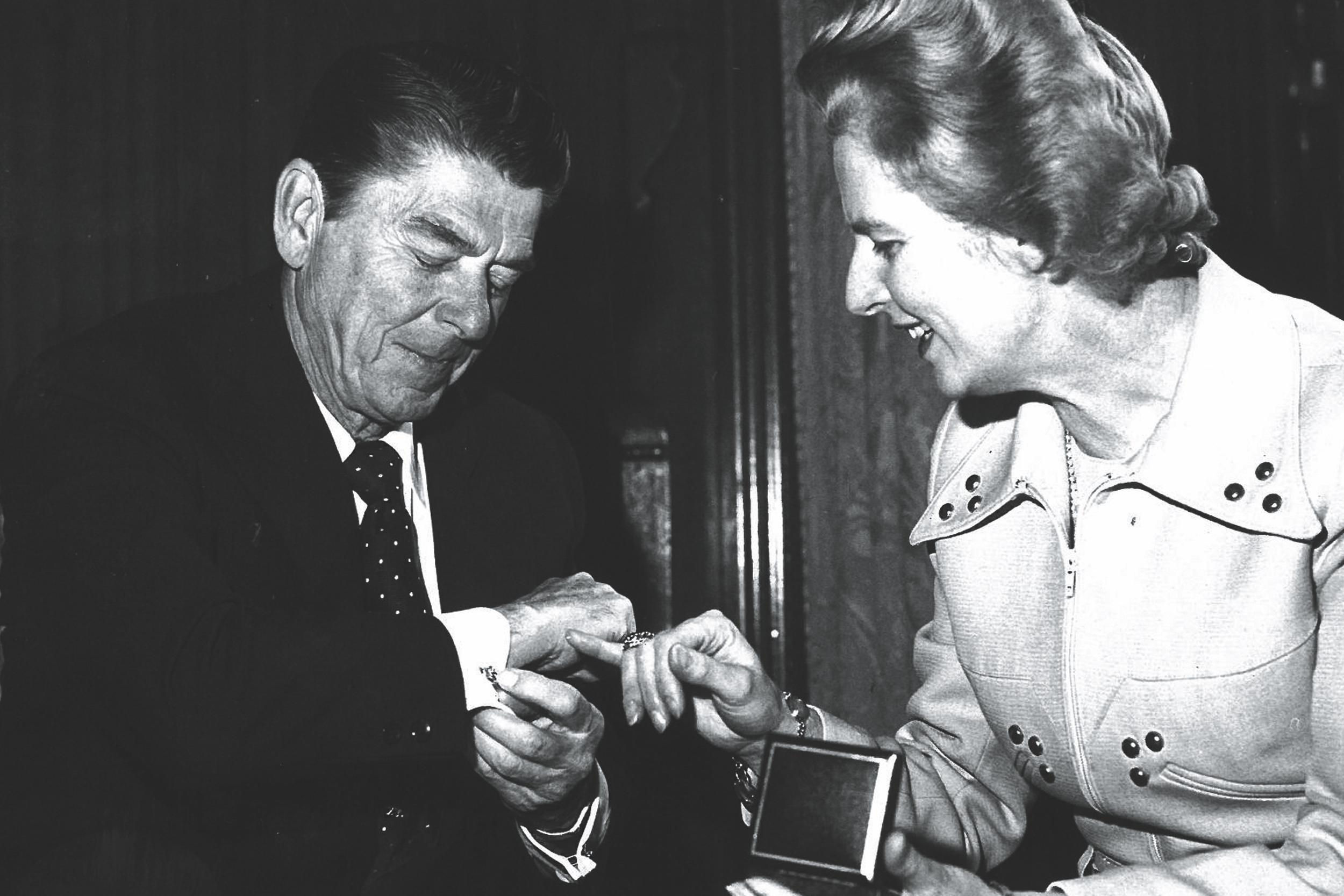
Margaret Thatcher presents Ronald Reagan with cufflinks in a Design Philipp box in 1975.
A global player
Watch boxes was another strength of Customline. Philipp III had forged relationships with many major watch brands and Philipp IV continued to cultivate this. Between the Swedish and British factories, Skandinaviska Etuifabriken and Customline were creating boxes for many of the biggest brands, including Timex, Rotary, Citizen, Seiko, and more.
Many of the boxes were being made in Wales, as the use of injection moulding allowed it to make more complex designs faster. Orders were stacking up, and its boxes were being shipped out to stockists across the globe.
One of its most important watch clients was a little closer to home: the British brand Sekonda, which was founded in 1966 and based in Leicester. The Sekonda account allowed Philipp IV to flex his creative muscles. He designed an elliptical oval-shaped watch box for the brand that could be pulled apart to reveal the timepiece within. Customline made millions of these each year at its factory in Wales.
In the early 1980s, Philipp IV spotted a further opportunity for international growth. Requests for sales had been coming in from Canada, and Philipp IV thought it would be a sage move to set up a distribution company there. Design Philipp Canada was incorporated on June 8th, 1984, with offices in Mississauga, a city that neighbours Toronto.
Philipp IV stayed in Britain, and entrusted the running of Design Philipp Canada to managing director Bill Gale. The business started to develop, and as it did, Bill had a suggestion - why not also launch across the border in the United States?
Bill introduced Philipp IV to a friend of his called Dick Falcone, who was based an hour’s drive north of Chicago in Northbrook, Illinois, where he was elected Village President in 1985. Bill suggested that Dick should be the one to target American retailers on Customline’s behalf. Philipp IV agreed, and together they set up Design Philipp USA.
By this time, Skandinaviska Etuifabriken had mostly pulled out of the US market, but Philipp IV still had solid contacts there, including Marshall Tulin, chairman of the fashion accessory company Swank, who had collaborated with Philipp III for many years.
Soon, these two sales channels in the Americas began to bear fruit, and the Customline business, through its American and Canadian companies, now had access to two enormous potential markets. Philipp IV had proven that he had a business model that could scale, and that could take the family name to new heights.
Under pressure
Philipp IV was winning more and more business, and his personal life was growing too. He and Judie had two more children. Simon Philip Wolf was born on December 3rd, 1964, and Anna Wolf on April 30th, 1967. Life was good, but a storm was brewing on the horizon.
In Sweden, Philipp III was facing charges of tax evasion, and had tried to direct the attention of the investigators towards his son, Philipp IV, who had no dealings in the affair that Philipp III was later acquitted of. Philipp IV was a fastidious record keeper, and, as such, the matter was quickly cleared up. However, the act of betrayal by his father stung deeply. Philipp III and Philipp IV became estranged after this argument and never spoke again.
Customline continued to grow, and still worked with the Malmö factory, which had now been renamed Swedbox after a management buyout that pushed Philipp III out of the business. Though the factory in Wales was constantly busy with new Canadian and American orders, deals with watch brands, and its retail clients in the UK, the margins on the products that Customline was producing weren’t strong enough. In reality, this bustling company was struggling to turn a profit.
There was also the pressure of emerging competition from the Far East, where unit prices for boxes were vastly cheaper. The quality was also lower, but it didn’t stop customers asking Customline to match the prices they were being quoted in China.
Eventually, Philipp IV had to admit that the Welsh factory was no longer financially viable, and in 1991 it closed down. In true Philipp IV style, rather than wallow, he threw an enormous party to mark the occasion.
At the same time, Swedbox in Malmö was facing similar issues, and would end up filing for bankruptcy on April 2nd, 1991.
With no factories to produce its boxes, it felt like the end of the road for the Wolf family business. However, the pack had one more ace to play – Philipp IV’s son, Simon.
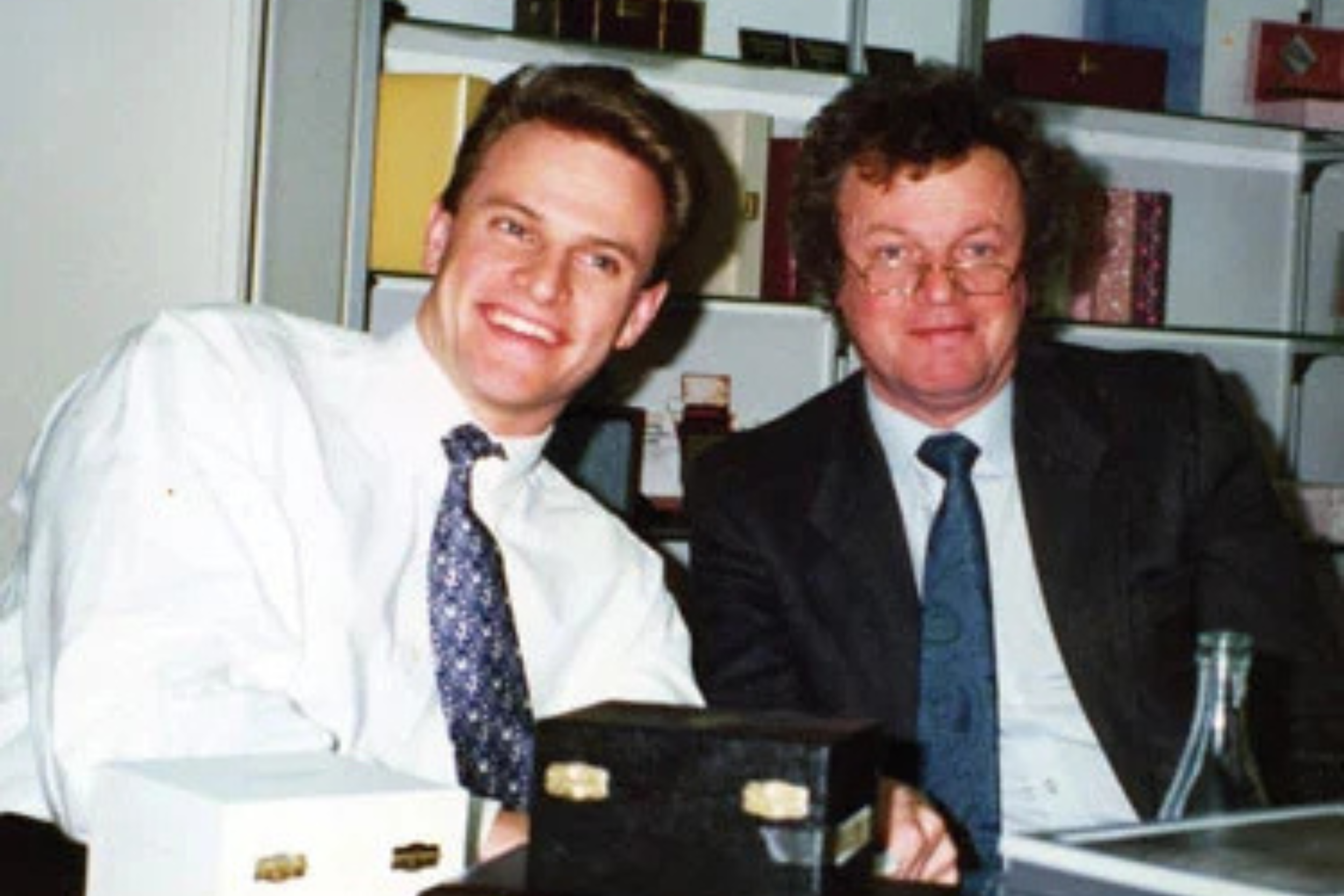
Philipp Wolf IV (right) with his son Simon Wolf.
Philipp Wolf IV passed away in March 2026, aged 89. This article is an extract from the book WOLF: A Family History of Boxmaking by Simon Wolf and Rachael Taylor