The price of gold on BBC Women’s Hour
How the rising cost of gold is affecting jewellery designers and customers alike
By Amy Wakeham
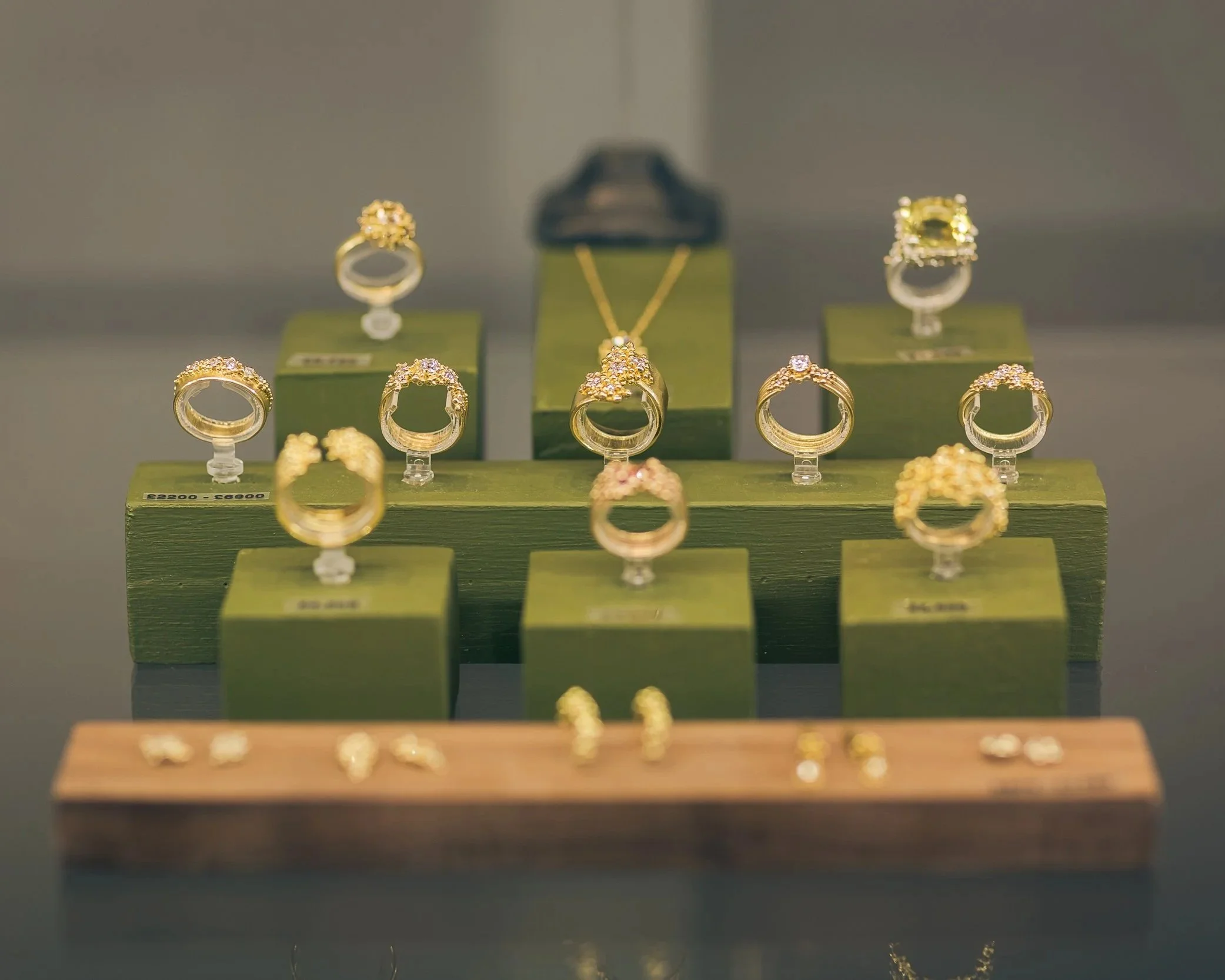
The global price of gold has skyrocketed in recent months, hitting a record high of $4,000 (£2,985) an ounce in October 2025. The high cost has had an impact across the jewellery industry, affecting both designers and their customers.
Rachael Taylor appeared on BBC Women’s Hour recently to discuss the issue, including why gold prices are at an all time high.
“If you look globally, obviously there's a lot of unrest at the moment,” she explains. “Traditionally, the gold price tends to spike when there's uncertainty in other markets, because it is a solid asset [that people want to invest in]. Because there's been this sustained period of uncertainty, the price has just gone up and up and up.”
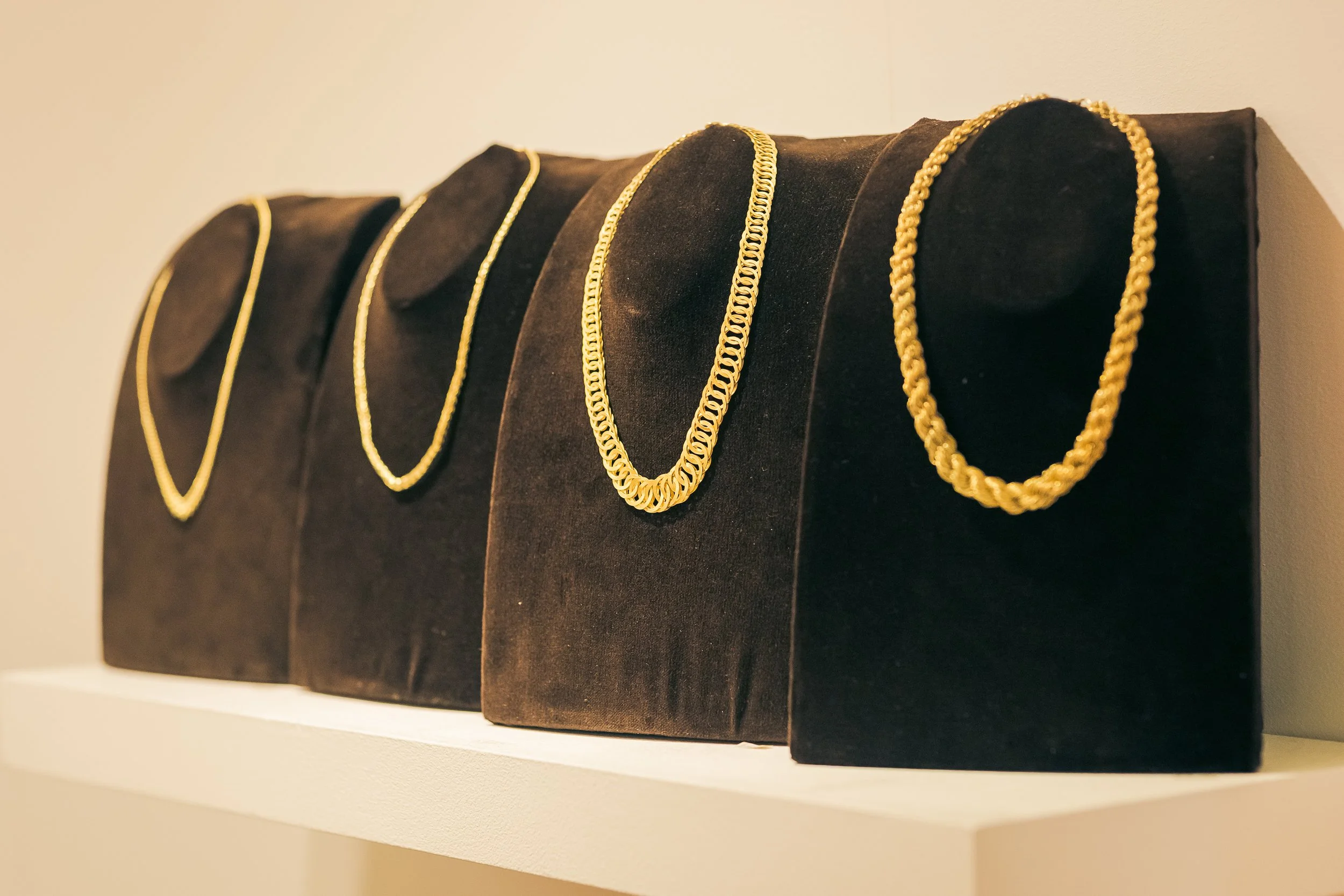
Gold necklaces by Lucie Gledhill at the Goldsmiths’ Fair 2025. (Photo by Paul Read)
‘Suppliers are overrun’
Fellow commentator on the BBC Women’s Hour show, jewellery designer Sia Taylor, noted that her gold supplier is also a maker of gold ingots for investors, and as such their capacity for their jewellery clients has diminished.
“They're overrun at the moment by people buying gold for investment, which means it's very hard for them to fit in making small quantities of different alloys for a small business,” she says.
BBC Women’s Hour producers also visited the Goldsmiths’ Fair, which displays the UK’s best contemporary jewellers and silversmiths. The producers spoke to several different jewellers at the Fair about how the cost of gold is impacting their business and their designs.
“This is my 25th year in business. I've seen gold prices go from seven pounds a gram to 100 pounds a gram,” goldsmith and jewellery designer Sarah Stafford told the BBC. “In that time I've gone from probably 50% for the work in my collection being 18 carats to now, where I only have four rings. I'm using gold in different ways.”
She notes that she’s seeing a lot more gold plating this year, as a result of the cost of the metal. “If you plate something, it makes it sound a little bit on the cheap side,” she says. “But you can use vermeil to plate, which is much thicker than regular plating. And you can also get a beautiful richness to the tone. You have the gold colour, but you don't have the expense.”
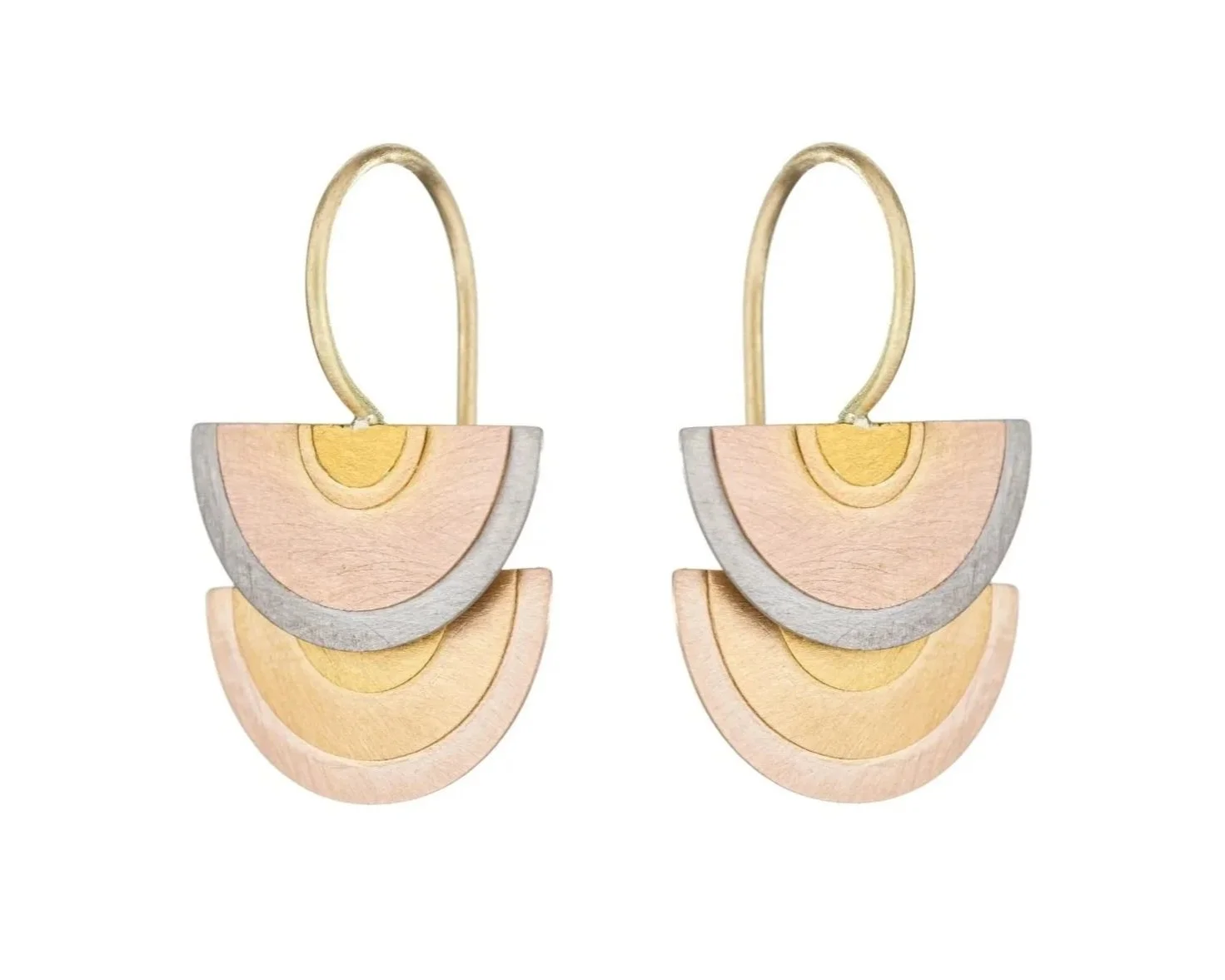
‘Sun Halo’ earrings by Sia Taylor
Alternative solutions
The higher price of gold means that finished pieces of jewellery are more expensive for customers, too. Rachael Taylor explained the different methods that designers are using to use less gold, so the prices of the final products aren’t so high.
“They are using lighter designs,” she says, “and also looking at new technologies – you can now 3D print directly in gold, which allows a lot of control over the design. You can use a smaller amount of gold to get exactly what you want.” She also says that many jewellers are also looking at using alternative materials to keep costs down. “For example, one of the trends we've seen recently is incorporating precious wood alongside gold.”
However, Rachael Taylor warns that gold prices can only go up so far before lots of jewellery customers are priced out of the market. “I think there's a real worry among jewellers at the moment – there's only so far it can go,” she says.
“I was at a talk recently with some jewellers who were discussing the idea that they now will have to find completely new customer groups, because the people who could afford their jewellery last year are not the same people who can afford their jewellery this year.”
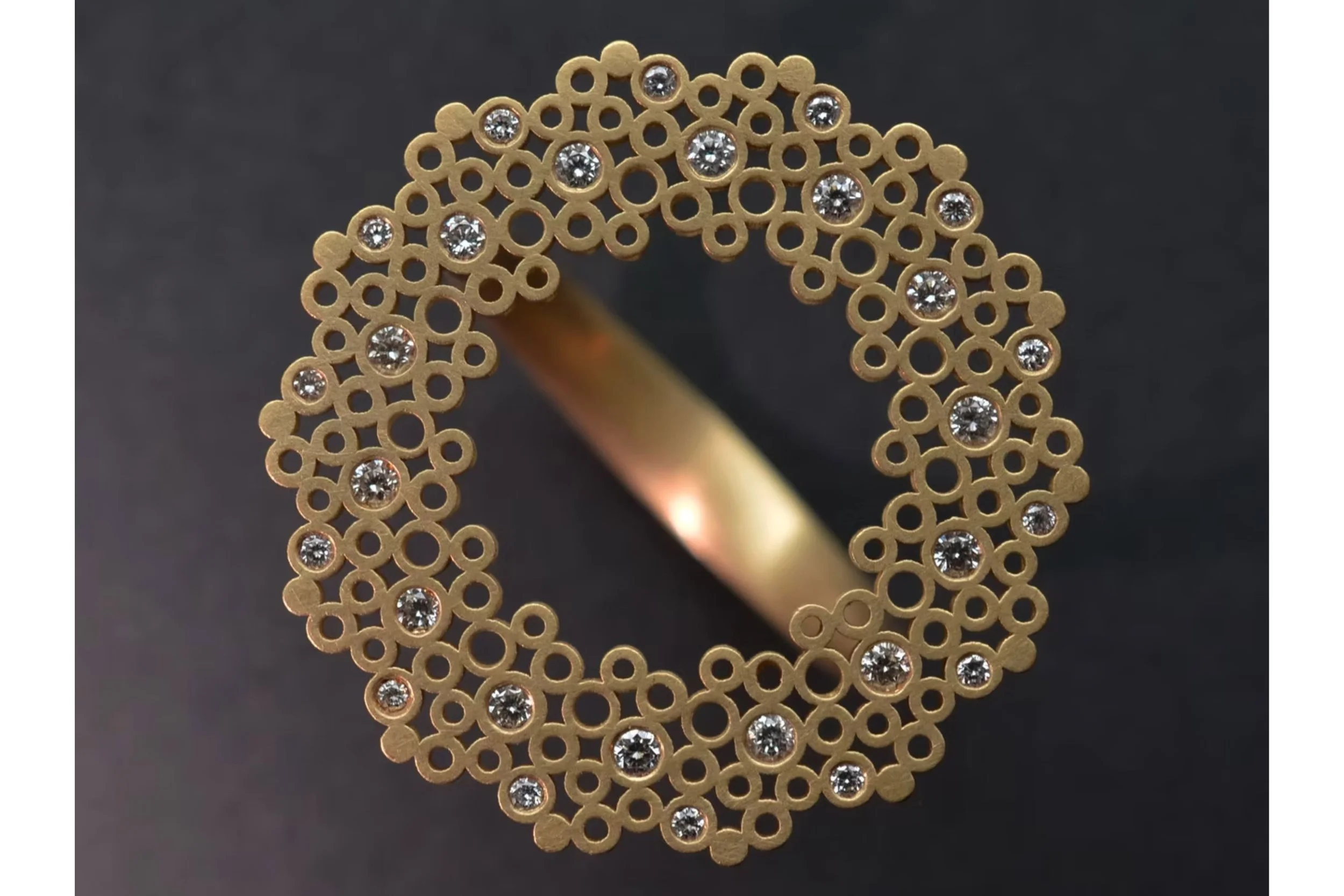
Sarah Stafford Halo ring in 18-carat gold with diamonds.
Weighing up the investment
It also means that some jewellers may have to stop using gold at all in their creations, as it’s simply too expensive. Sculptural jeweller, Ute Decker, who spoke to the BBC at the Goldsmiths’ Fair, says: “It pains me a little bit to see how prices are going up so much, and so fewer jewellers will work in amazing gold jewellery. I mean, now really could be the best time to buy gold before we jewellers stop using it.”
Women’s Hour presenter Anita Rani went on to point out that, in many Asian communities, traditionally gold jewellery is given as wedding gifts to women for security and investment reasons. But the jewellery investment market, according to Rachael Taylor, is much more resilient than just purchasing it “for adornment purposes”.
“Because the whole ethos behind that type of buying is they're seeing it as an investment,” she explains. “So actually, it’s actually quite reassuring that prices are going up, because that encourages you that there is somewhere [sensible] to put your money.”
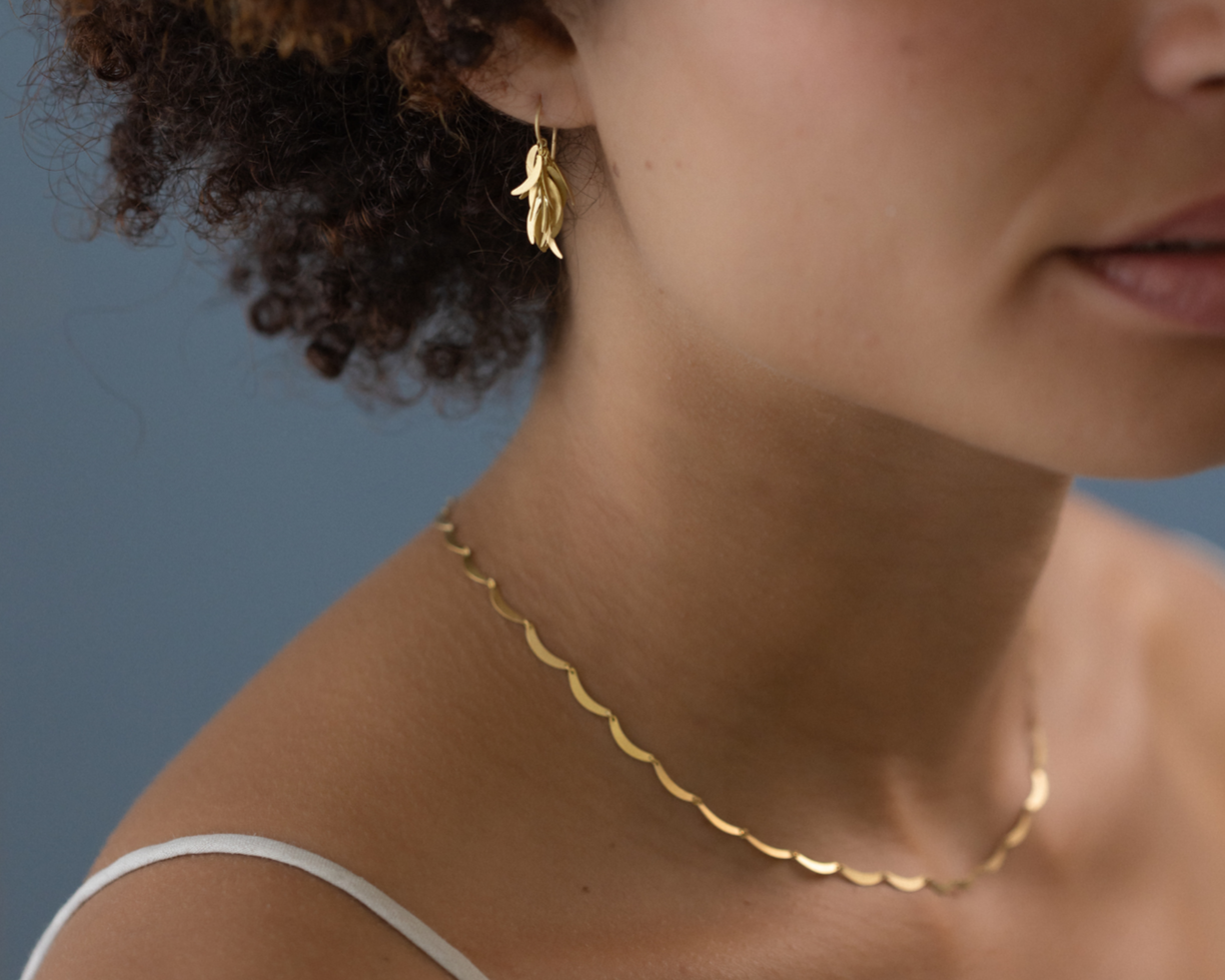
‘Cloud’ necklace and ‘Small Golden Leaf’ earrings, by Sia Taylor
You can listen to Rachael Taylor’s interview on BBC Women’s Hour in full here or below.
Main image: Gold rings by Hannah Bedford at the Goldsmiths’ Fair 2025. Photo by Paul Read