Annoushka Ducas: “It was like selling a fifth child”
From Links of London to her own jewellery house, the jeweller reflects on instinct, independence and designing jewels for life
By Rachael Taylor
Annoushka Ducas is a brand builder, and a visionary. Since joining the jewellery industry more than three decades ago, the designer has successfully created two global brands – Links of London and Annoushka – and has been at the vanguard of change when it comes to how the world viewed jewellery with a name.
"When I started, jewellery wasn't branded," Ducas recalls. "That’s a massive, massive change [compared with the landscape today]."
When she launched Links of London in 1990, the idea that jewellery could have a brand identity beyond the world of high jewellers such as Cartier or Tiffany & Co was still novel. She started out selling some collections unbranded, but as her vision solidified, she took a major risk to make her silver jewellery brand Links of London the household name it became.
"Mappin & Webb were our biggest wholesale client, but not as Links of London – they were selling it as own label,” says Ducas. “One of the bravest things I did – as it was worth a lot of money to us at that point – was to say: ‘If you don't take it in our boxes and brand it, we won't supply you anymore.’”
Luckily, the answer was yes.
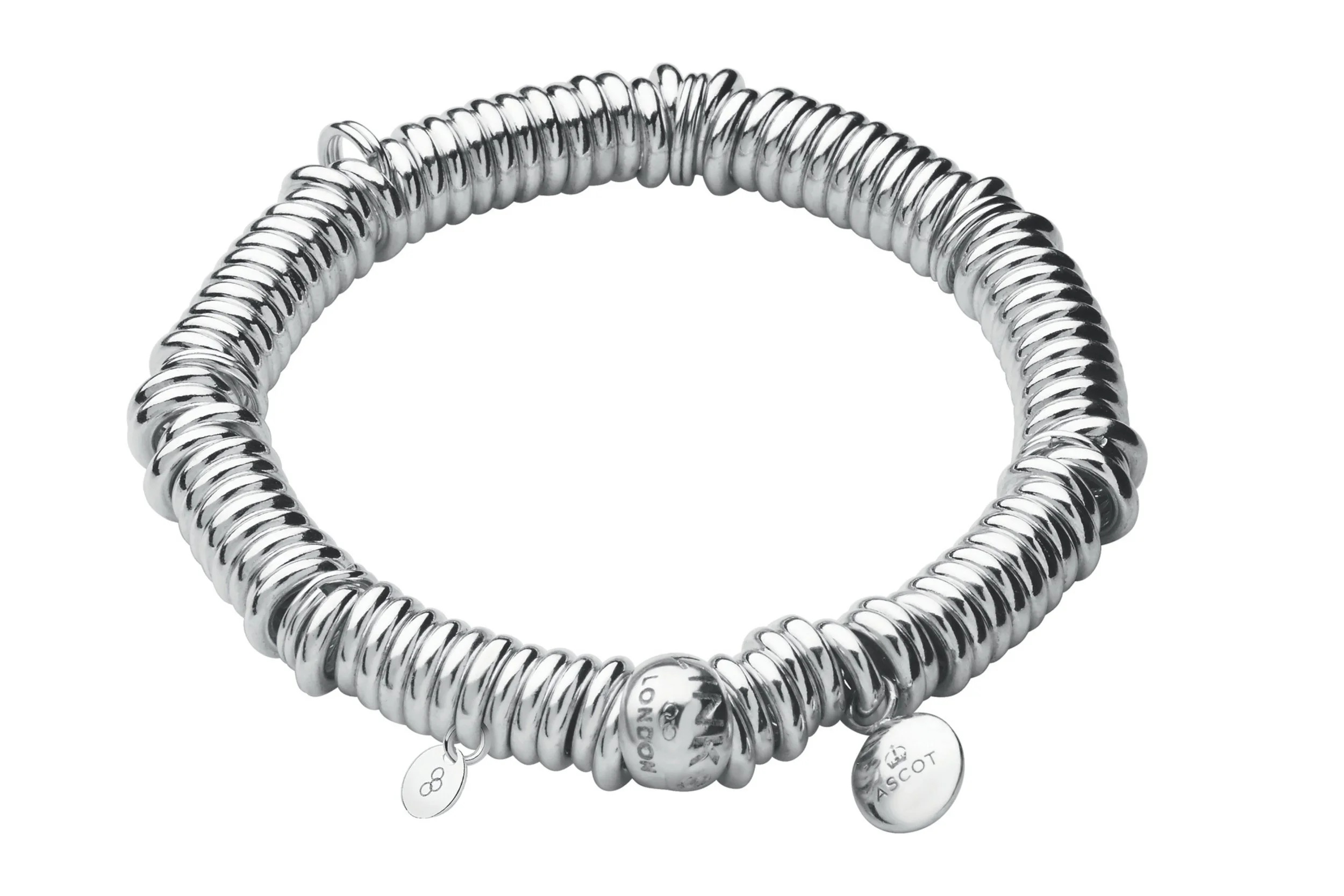
A silver Sweetie bracelet, an iconic Links of London design. (Image: Links of London)
Building a jewellery brand
Ducas says the decision to push Links of London as a brand wasn’t driven by a clairvoyant sense that soon branded jewellery would be the norm in the industry. Instead, it was a more personal need to control the narrative. "In order for me to be able to control what it looks like, to see how it's presented, in order to keep the value, I’ve got to do it my way – it seemed obvious," she says.
Part of the charm of Links of London, and the other branded silver jewellery offers that followed, was that they made fine jewellery accessible to the masses. Most shoppers could afford to buy a charm, but doing so felt like a luxury experience. It gave a new genre of customer a reason to step into stores like Mappin & Webb. "At Links, we [aimed] to make jewellery accessible for as many people as possible at affordable prices,” says Ducas, noting that it was one of the first fine jewellery brands to pursue a mass-market strategy in this way.
This democratisation of jewellery collecting very much chimes with Ducas’s general ethos that jewellery is not something to be revered on a pedestal from afar, or kept locked in a safe. Her mantra is ‘jewels for life’ in every sense: enduring, versatile pieces that are designed to match the personality of their owner, and accompany the rhythms of their life, from black-tie dinners to doing the gardening.
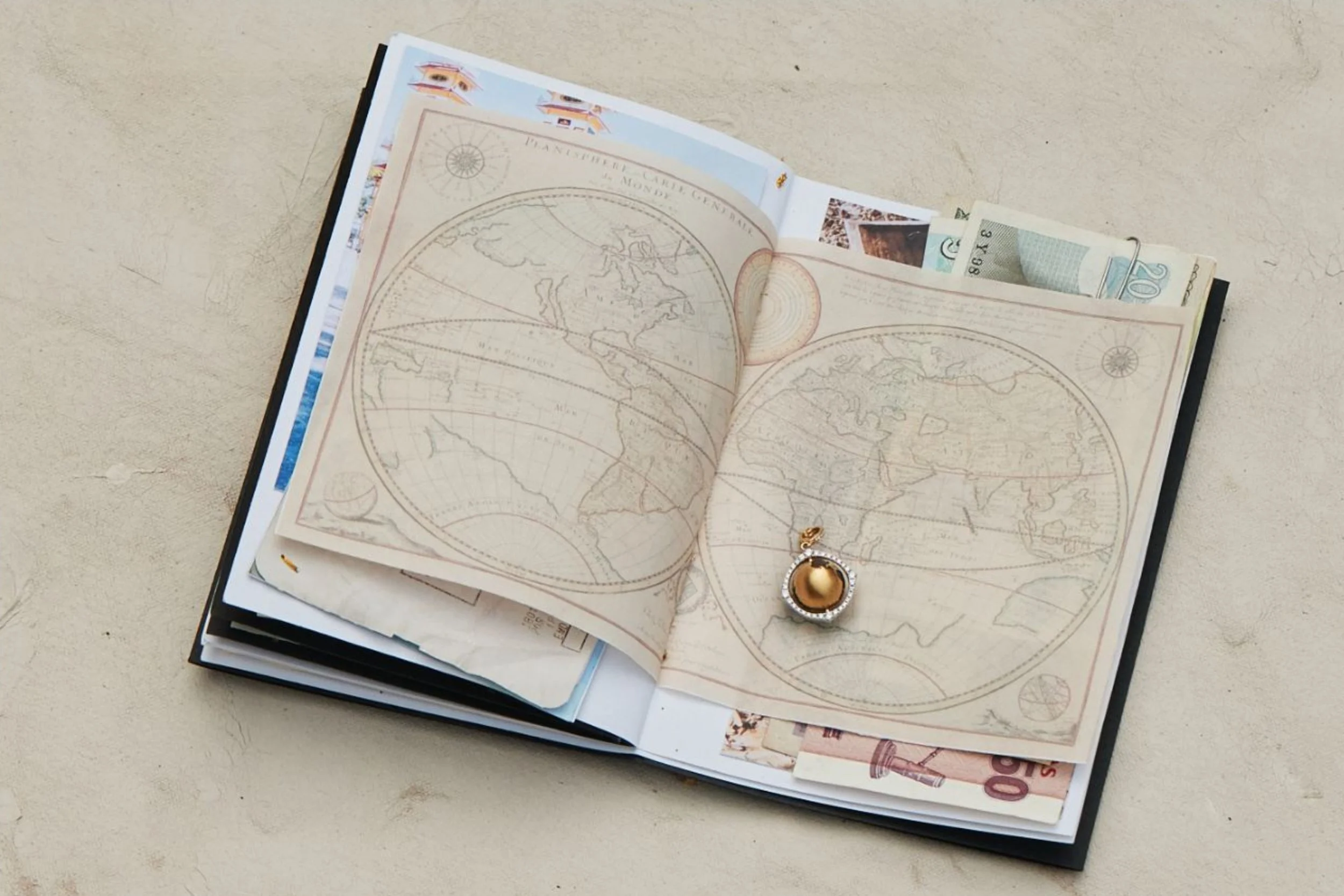
Gold and diamond Annoushka globe charm. (Image: Annoushka)
Jewellery for real life
At the heart of Ducas’s work is narrative. Whether it's a charm bracelet marking life's milestones or a bold piece from Annoushka’s Knuckle collection, which centres on handmade chain crafted in Arezzo by a single master goldsmith, every design starts with a story – often her own.
"I've always designed to my particular stage in life," she says. "At Links, I started with cufflinks because I couldn't think of what to give my father as a present. Then I went on to have children and thought, I can design something that I think they would like." Her collections have tracked her personal journey, and in doing so, connected deeply with customers navigating similar stages.
That personal connection extends to wearability. "If I can never see myself wearing it, let's not go there," she says, noting that this instinct has served her well over the years. "At the beginning, I thought that’s just coincidence, but it isn't. When I have tried to do things that I think I should do but that are not relevant to me, or something I wouldn't wear, it doesn't sell.”
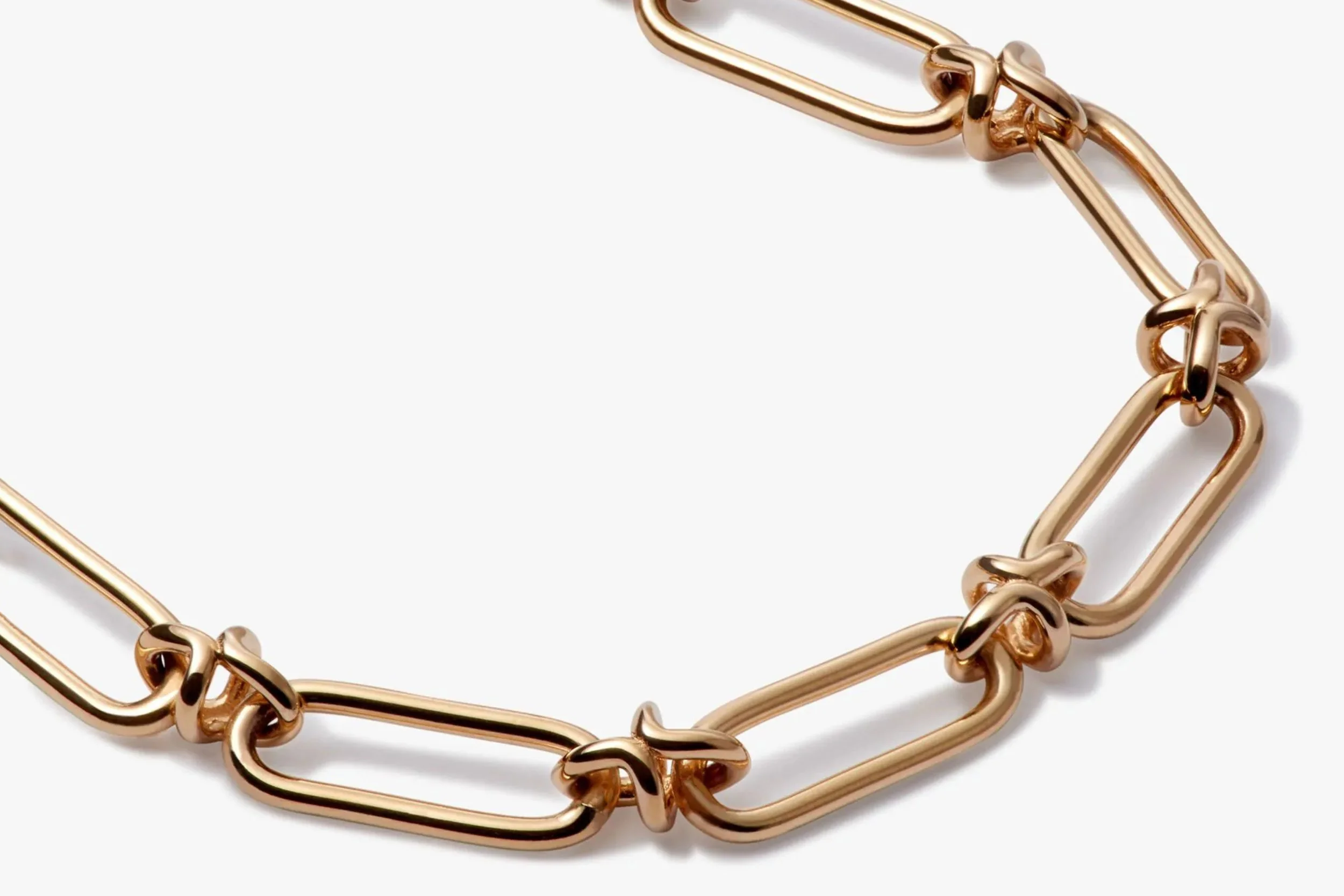
A gold necklace from the Annoushka Knuckle collection. (Image: Annoushka)
Knowing when to let go
A major milestone in Ducas’s career – and a moment that truly tested her ability to tune in to her instincts – was selling Links of London in 2006 for £45 million to Greek jewellery group Folli Follie. "It was like selling a fifth child," she admits.
At the time, the business had 48 Links of London stores around the world, a huge wholesale business, and an annual turnover of £42 million. Some might have considered her crazy to walk away from a thriving business, but for Ducas it had become overwhelming with the constant pressure of commercial success, and the endless time spent travelling and being away from her young children. She also felt a growing sense of disconnection with the creativity that first drew her to jewellery.
"When something gets that big, you can’t help but [lose creativity]," she reflects. "I'd get a new idea for a design and someone in the franchise department would say, 'You can't do that for three years.'"
Her self-titled brand Annoushka, launched in 2009, was a chance to return to a more hands-on way of working. "I really wanted to own the relationship with the customer," she says. "I didn’t want to have all of those stockists all around the world where suddenly the tail starts to wag the dog."
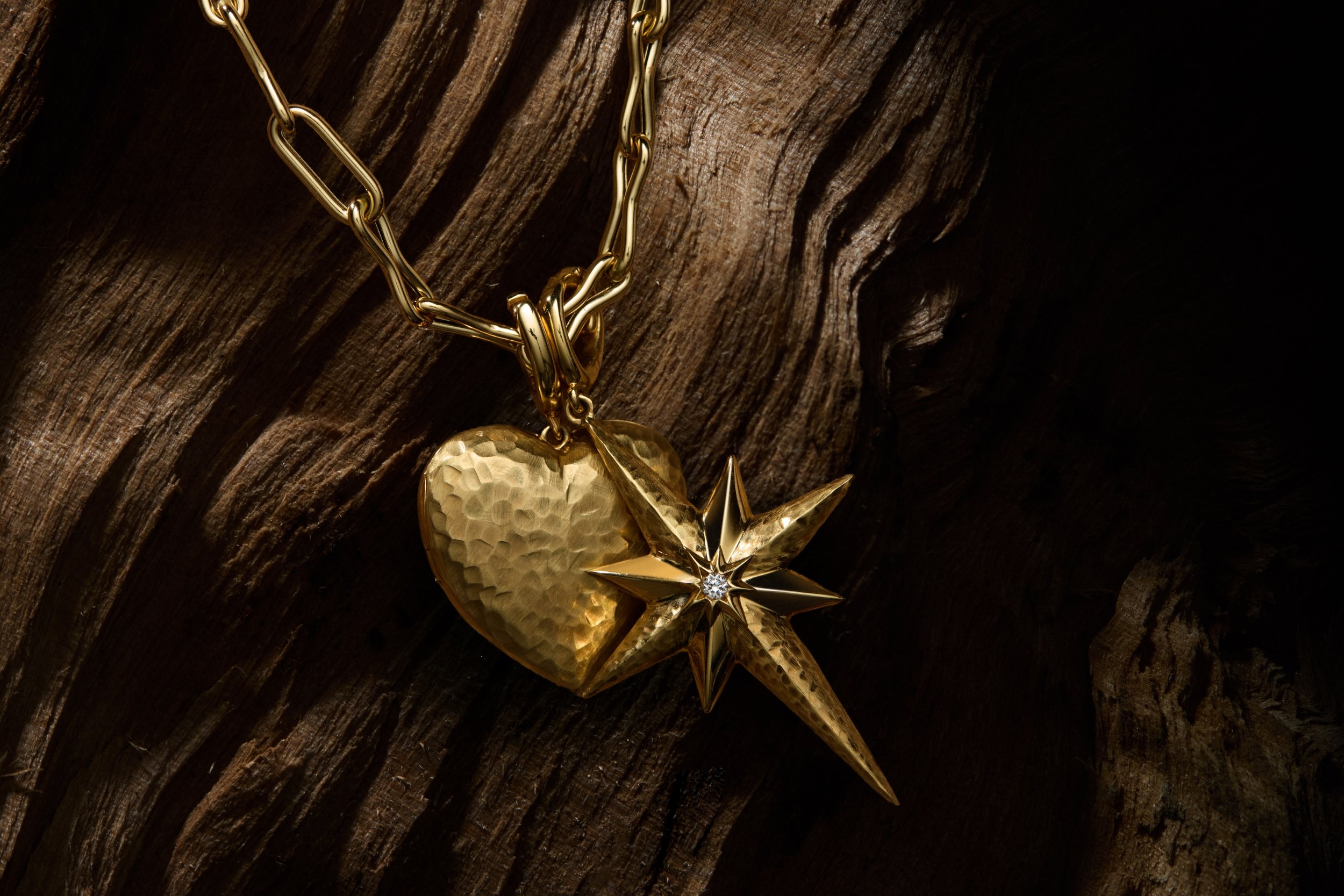
A necklace with gold charms from Annoushka’s Touch Wood jewellery collection. (Image: Annoushka)
A very different proposition
The other difference between Links of London and Annoushka is that the latter is a gold jewellery brand, which brings with it a different sales model and clientele.
The Annoushka brand is successful in its own right. It had a turnover of £9.3 million in 2023, and in 2024 hired a new CEO in Zia Zareem-Slade, who was formerly head of online at Selfridges and customer experience director at Fortnum & Mason. Yet, the set up affords Ducas a slower pace and more freedom: "It allowed me to get the creativity back, the idea that I could make one of something."
Looking back on her epic career so far, there have been so many memorable highs, says Ducas, and these have evolved with time. "[At first] seeing people walking around with my [Links of London] bag was the most exciting thing, or pulling up at traffic lights and seeing someone wearing a [Links of London] Sweetie bracelet," she says. “Then getting an MBE [in 2012 for services to the UK jewellery industry] – that’s pretty exciting. And did I ever think that A$AP Rocky would come in and curate [an Annoushka] charm bracelet for Rihanna just as she had her next baby? No, I didn’t.”
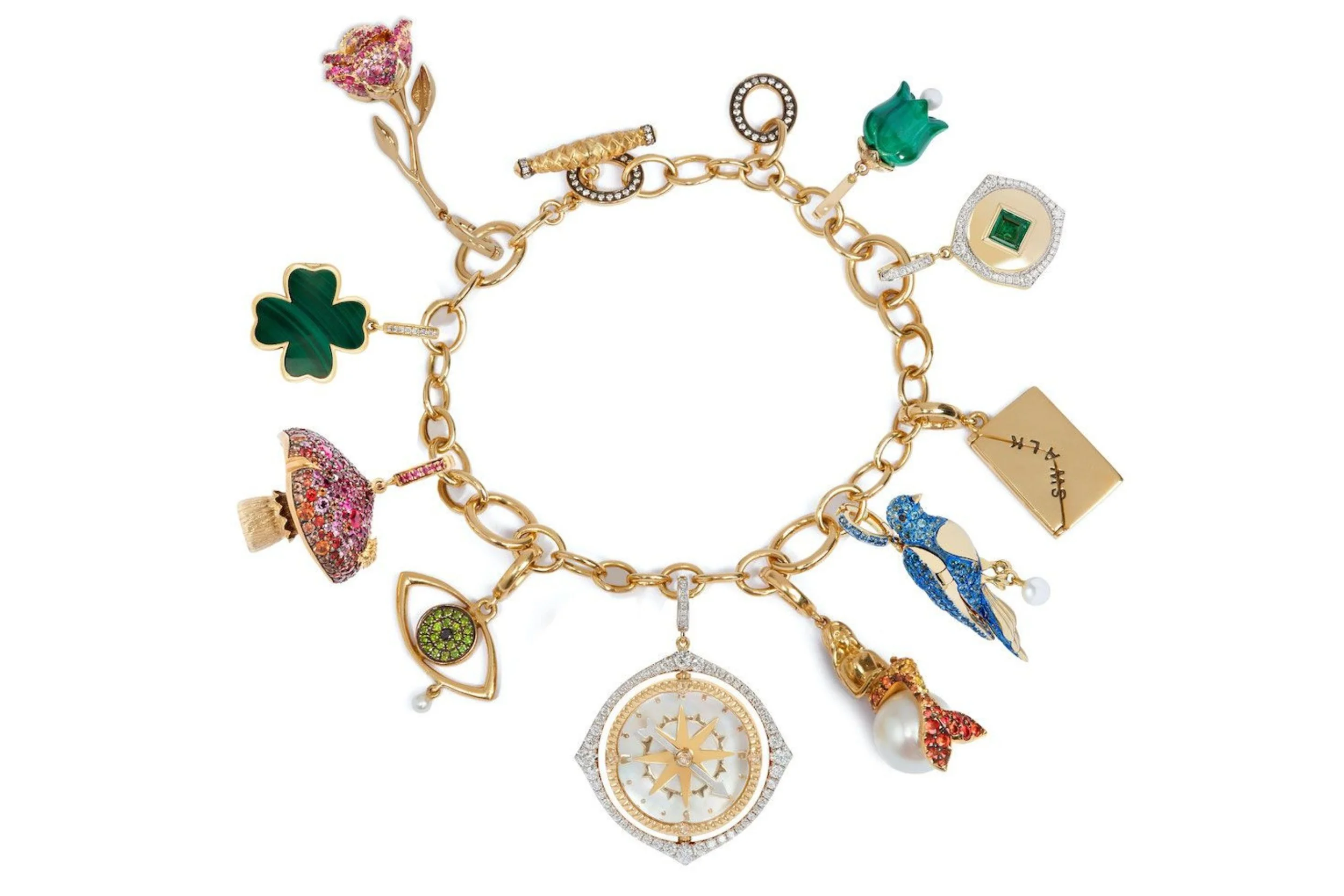
The charm bracelet Annoushka created for Rihanna. (Image: Annoushka)
Success beyond the balance sheet
Ducas’s ability to give back throughout her business life has also been a source of pride. A campaign to donate a portion of the sales from Links of London’s iconic – and much copied – friendship bracelet raised £1.5 million for the NSPCC.
She also founded The Brilliant Breakfast in 2020, an annual fundraiser that generates funds for The King’s Trust, with a view to enabling disadvantaged young women to access education, employment, and empowerment. "If you help one woman, it tends to affect between five and 10 lives,” says Ducas.
This sentiment extends to her professional world, too. "I have always been passionate about mentoring young designers and particularly women," she says. "I can teach them to avoid the pitfalls that I fell into, [and to make them] think about how they're going to earn a living from [jewellery]. I get huge satisfaction from that.”
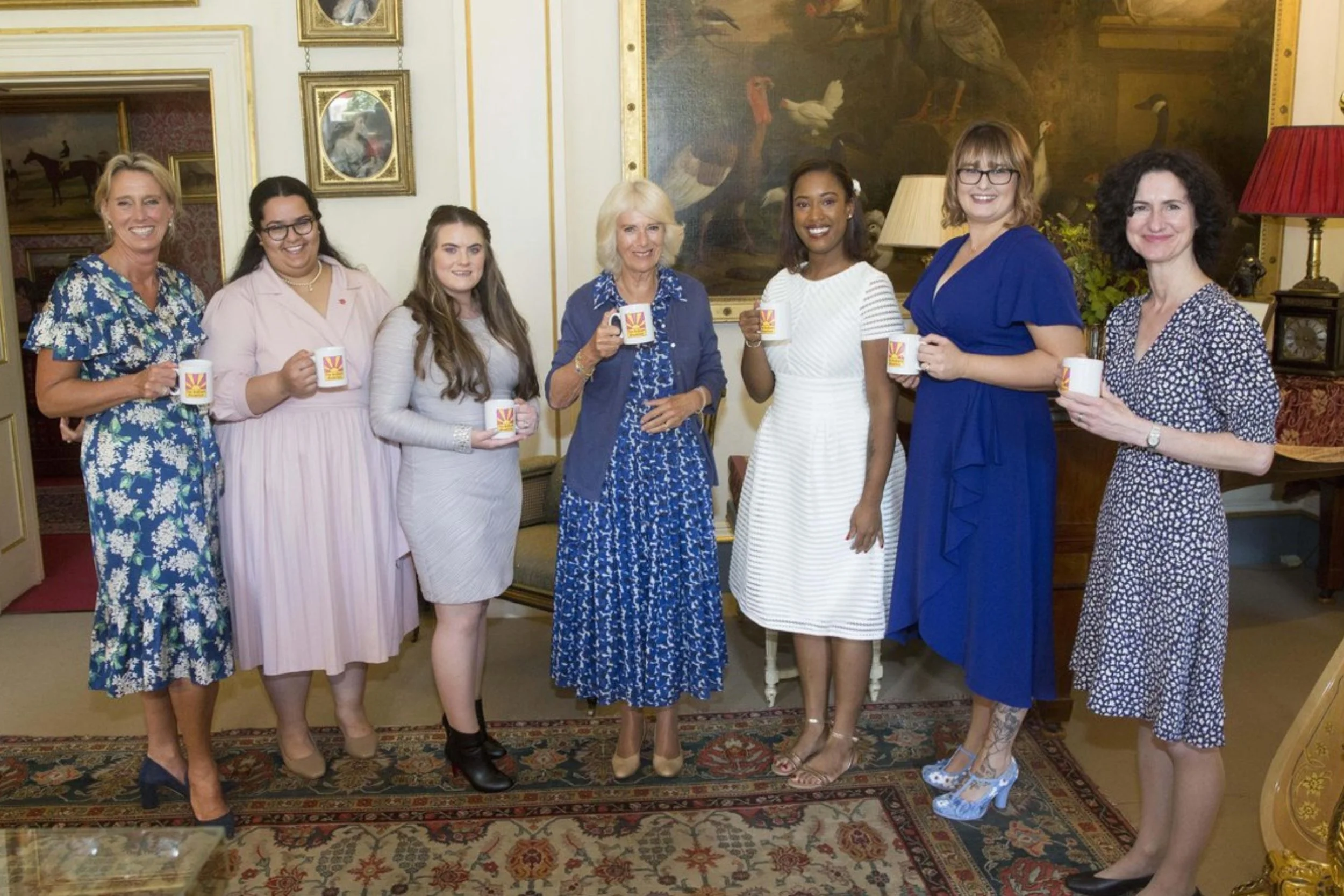
Annoushka Ducas (far left) with guests including Her Majesty The Queen (centre) at an event for The Brilliant Breakfast. (Image: The Brilliant Breakfast)
What will jewellery look like in 100 years?
Asked to imagine what the jewellery industry might look like 100 years from now, Ducas laughs. "I never thought about that before," she admits. But the more she considers it, the clearer her belief in certain fundamentals becomes.
"It’s all been about the stories, the memories; I don’t think that will ever change," she says. The importance of craftsmanship won't change either she believes, although she notes that “the materials might evolve”. She has already noticed an increased use of materials including titanium and lab-grown diamonds – although Ducas herself remains a purist. “I don't want a lab-grown diamond, I want it to have come from the earth and be full of imperfections,” she says firmly.
She hopes, too, that the values she's championed throughout her career – wearability, authenticity, connection – will endure. And when it comes to her own legacy, Ducas believes her contribution was simple but valuable: helping to make jewellery something for everyone.
This article is an edited extract from the book Retail Jeweller: 100 Years in Jewellery by Rachael Taylor, published by Emap
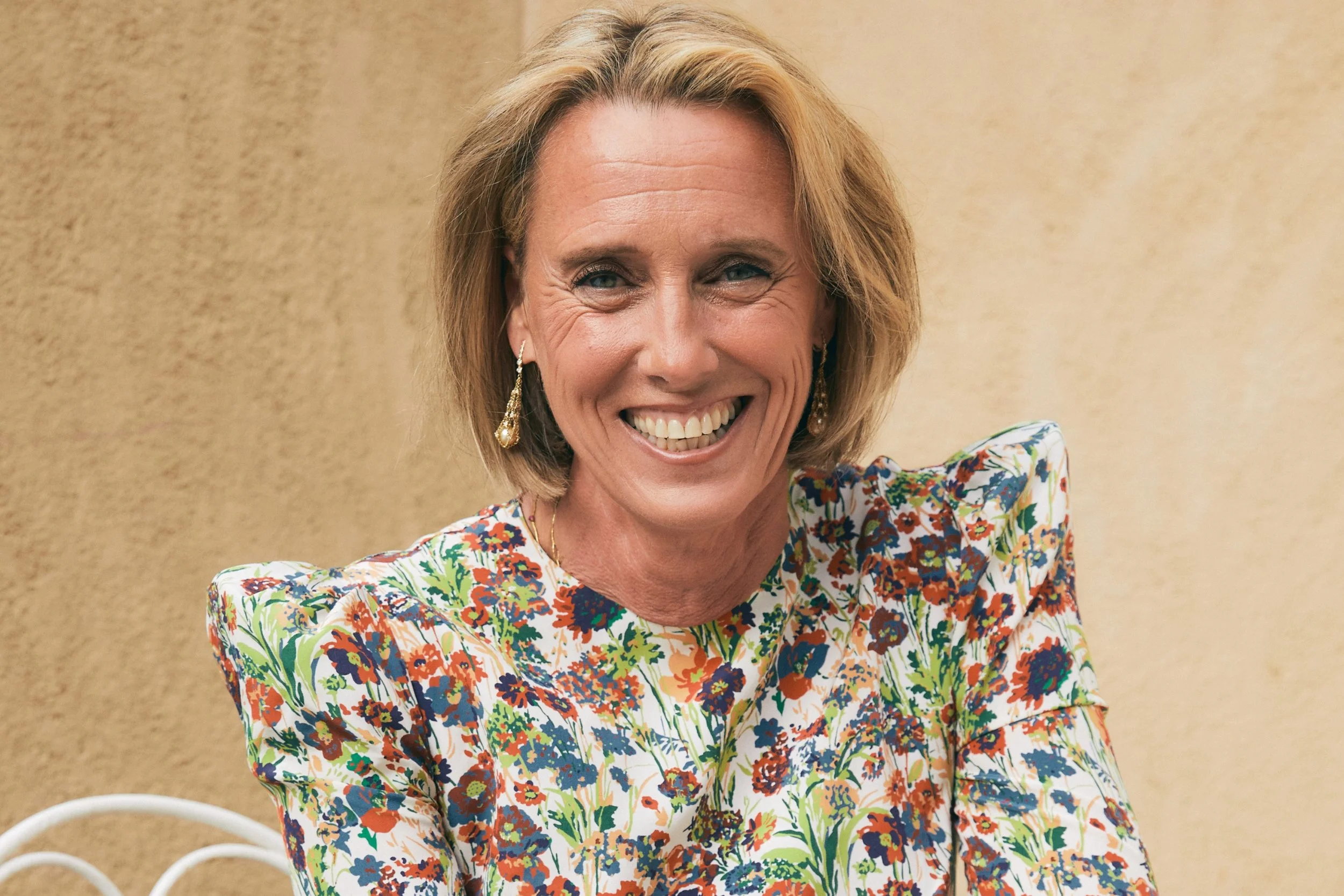
Main image: A portrait of Annoushka Ducas. (Image: Annoushka)